

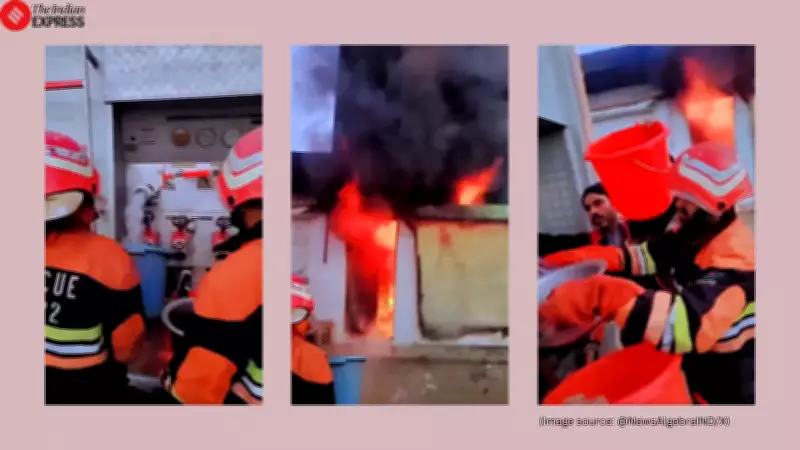
Pakistani Firefighters Battle Blaze With Buckets, Sparking Outrage Over Government Neglect
A recent fire incident in Pakistan has ignited widespread outrage and concern after a viral video exposed shocking gaps in emergency preparedness. The footage, which has circulated rapidly across social media platforms, shows firefighters resorting to primitive methods to combat a blaze in a populated residential area.
Primitive Firefighting Methods Exposed
When flames erupted in the residential neighborhood, residents immediately called the fire brigade, expecting trained professionals equipped with modern tools to handle the emergency. However, what unfolded left onlookers stunned and dismayed.
Instead of deploying functional hoses, fire extinguishers, or other standard firefighting equipment, the arriving firefighters were seen attempting to contain the fire by filling buckets with water and throwing it at the flames. As the fire threatened nearby homes and shops, the scene descended into what many described as a desperate and inadequate response.

Viral Video Captures Public Anger
The video quickly went viral, with the person recording the incident expressing frustration and sarcasm. In the clip, the individual can be heard saying, "Yeh dekhiye inki koi taiyaari nahi thi, yeh baaltiyon se paani daal rahe hain. Yeh humara Pakistan hai, yeh CM saab yeh check kar lein" (Look at this, they are not prepared at all, they are throwing water with buckets. This is our Pakistan, the Chief Minister should look into this).
He added sarcastically, "Bhai, bohot taiyaari hai aapki acchi, bohot khushi hui hai hume" (Brother, your preparation is excellent, we are very happy to see this), directing his anger toward the firefighters who were clearly struggling with inadequate resources.
Social Media Erupts With Reactions
As the footage spread, social media users flooded comment sections with reactions ranging from anger to despair. Many expressed deep concern over the lack of basic infrastructure and support for emergency responders.
One user wrote, "This is heartbreaking and alarming. Firefighters risk their lives, yet are sent without proper equipment or support. It's not bravery that's lacking, it's basic infrastructure and planning. Emergencies expose the real priorities of a system, and here, the people pay the price."
Another comment highlighted the contrast between the firefighters' effort and government neglect, stating, "Firefighters trying their best with what they have, respect for effort. But government? Zero respect. Years of loans, IMF begging, still no proper gear. Sad reality behind the meme."
Others reacted with dark humor, with one user quipping, "Yeh fire brigade hai ya bucket challenge? 2026 chal raha hai aur aag bujhane ke liye balti se paani phenka ja raha hai" (Is this a fire brigade or a bucket challenge? It's 2026 and fires are being put out by throwing water in buckets).
Broader Implications for Emergency Services
This incident has raised serious questions about the state of emergency preparedness in Pakistan. The use of buckets instead of modern firefighting equipment underscores a critical failure in resource allocation and infrastructure development.
- The lack of functional hoses and extinguishers points to systemic neglect of public safety services.
- Firefighters, who put their lives on the line, are forced to work with inadequate tools, increasing risks to both responders and civilians.
- The viral nature of the video has amplified calls for government accountability and urgent reforms in emergency response systems.
While the exact time and location of the incident in Pakistan remain unidentified, the video has become a powerful symbol of broader issues facing the country's public services. It serves as a stark reminder that without proper investment and planning, communities remain vulnerable during crises.
The outrage sparked by this event reflects growing public frustration over perceived government inaction and highlights the urgent need for improved emergency preparedness to protect lives and property.






