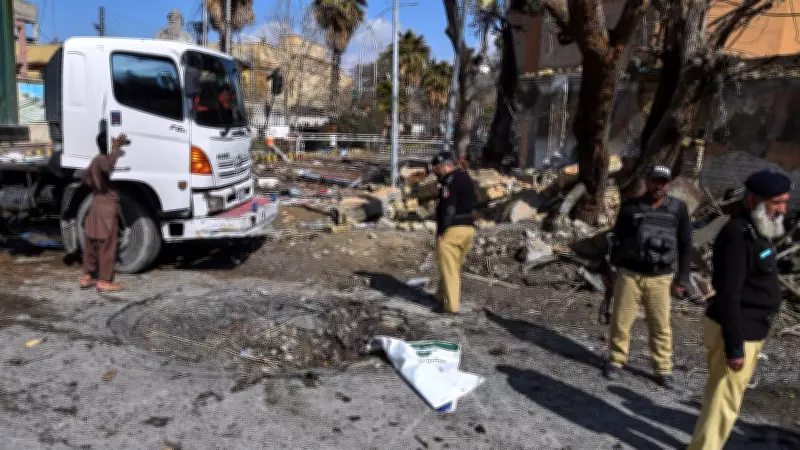
The Pakistan Army has announced the conclusion of a major counter-terrorism operation in the restive Balochistan province, revealing a significant human toll from the days-long engagement. According to official statements released on Thursday, the military's intensive campaign resulted in the deaths of 216 terrorists, alongside 36 civilians and 22 security personnel.
Operation Radd-ul-Fitna-1: A Detailed Account
The Inter-Services Public Relations (ISPR), the media wing of the Pakistan military, confirmed that Operation Radd-ul-Fitna-1 was successfully concluded after being launched on January 26, 2026. This large-scale military action was initiated in response to a series of terror attacks that targeted multiple locations across Balochistan, prompting a robust security response.
Intelligence-Driven Operations in Panjgur and Harnai
Military operations were specifically carried out in the Panjgur area and on the outskirts of Harnai district, following what the Pakistan Army described as credible and verified intelligence confirming the presence of terrorist elements. The initial phase of these operations saw security forces targeting identified terrorist hideouts, leading to the elimination of 41 terrorists.

Subsequent aggressive and steadfast responses by security forces effectively thwarted further attacks, according to the ISPR statement. The military emphasized that these well-coordinated engagements and clearance operations significantly degraded the leadership, command-and-control structures, and operational capabilities of terrorist networks operating in the region.
Civilian and Security Force Casualties
In a sobering revelation, the army disclosed that 36 civilians, including women and children, lost their lives during the operations. Additionally, 22 personnel from security forces and law enforcement agencies were killed in the line of duty. The statement highlighted the human cost of the counter-terrorism campaign while asserting its necessity for regional security.
Allegations and Diplomatic Tensions
The Pakistan Army statement included allegations that "Indian-sponsored terrorist elements were seeking to disrupt peace and development" in Balochistan. This accusation follows a pattern of similar claims by Pakistani authorities regarding external involvement in the province's instability.
India has consistently and categorically rejected such allegations as baseless, characterizing them as Islamabad's usual tactic to deflect attention from internal challenges. New Delhi maintains that Pakistan's accusations lack evidence and serve political purposes rather than reflecting ground realities.
Impact on Infrastructure and Daily Life
The terror attacks that precipitated the military operation had significant practical consequences for Balochistan's infrastructure and transportation networks. Railway services across the province were suspended for five days following the outbreak of violence, with Pakistan Railways spokesperson Muhammad Kashif confirming that all railway traffic from Quetta had been halted due to security concerns.
Several railway tracks sustained damage during the attacks, further complicating restoration efforts. However, by Thursday, railway services had been successfully restored, marking a return to normalcy in this critical transportation sector.
Political Response and Regional Context
On Tuesday, Pakistan's National Assembly adopted a resolution urging the government to develop an "aggressive" national response to address the threat posed by external sponsors of militancy and their internal facilitators. This parliamentary action reflects growing political concern about security challenges in Balochistan.
Balochistan, which shares borders with Iran and Afghanistan, has experienced a long-running violent insurgency. Baloch insurgent groups have previously targeted the USD 60 billion China-Pakistan Economic Corridor (CPEC) projects, viewing them as exploitative of the province's resources.

Historical Precedent: The 2025 Jaffar Express Incident
The security situation in Balochistan has historical context, with the Balochistan Liberation Army (BLA) claiming responsibility for the March 2025 hijacking of the Jaffar Express train traveling from Quetta to Peshawar. That incident resulted in the deaths of 31 civilians and security personnel, with over 300 passengers held hostage, underscoring the persistent security challenges in the region.
The conclusion of Operation Radd-ul-Fitna-1 represents Pakistan's latest effort to address these security concerns through military means, though the significant casualties on all sides highlight the complex and costly nature of counter-terrorism operations in Balochistan.