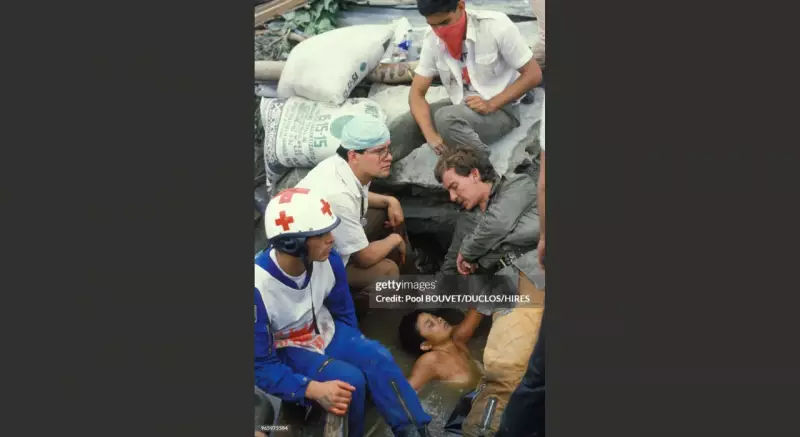
The piercing gaze of 13-year-old Omayra Sánchez Garzón, her face framed by dark, muddy water and her eyes profoundly bloodshot, remains one of the most powerful and haunting images of the 20th century. Captured in the aftermath of Colombia's deadliest natural catastrophe, this single photograph forced the world to confront a devastating tragedy and ignited a fierce ethical debate that continues to this day: why did the photographer not save her?
The Catastrophic Eruption That Wiped Out Armero
In November 1985, the Nevado del Ruiz volcano in central Colombia awoke with terrifying force. While the initial blast on 13 November 1985 was not considered massive, its consequences were apocalyptic. The intense heat melted approximately 10% of the glacier capping the volcano. This created fast-moving, lethal rivers of mud, volcanic debris, ash, and melted ice known as lahars.
These lahars raced down river valleys, gathering terrifying momentum, before crashing into sleeping towns hours later. One of these towns was Armero, home to around 29,000 people. The mudflows utterly engulfed it. The final death toll was staggering, with an estimated 20,000 residents losing their lives. Tragically, scientists had warned of this exact scenario months in advance, but evacuation plans were either non-existent or ignored. The complete destruction of Armero stands as a grim monument to a largely preventable disaster.

Omayra Sánchez's 60-Hour Ordeal and Final Words
Among the thousands of victims was young Omayra Sánchez. The mudflow swept through her home, trapping the 13-year-old in the wreckage. Her legs were pinned under concrete and debris. Rescuers later discovered her deceased aunt was holding onto her from below.
For nearly 60 hours, rescue workers and volunteers fought to free her, while television crews broadcast her struggle live to a horrified nation. She was given sweets and soda, and a tire was placed around her to keep her head above the murky water. As hope faded, her condition deteriorated severely. She began to hallucinate, speaking about school and a maths test she feared she would miss.
The prolonged immersion caused her eyes to become dark and intensely bloodshot and her hands to turn white. Her final words, spoken to those around her, were: "Mommy, I love you so much, daddy I love you, brother I love you." On 16 November 1985, three days after the eruption, Omayra Sánchez died. Her death was attributed to gangrene or hypothermia.
The Photograph and the Global Ethical Backlash
The iconic image was taken by French photojournalist Frank Fournier. He later stated he was utterly powerless to help, explaining that rescue was impossible given the circumstances. "When I took the pictures I felt totally powerless in front of this little girl, who was facing death with courage and dignity," Fournier told the BBC.
He saw his role as a documentarian, hoping his work would mobilize aid for other survivors. "I felt that the only thing I could do was to report properly on the courage and the suffering and the dignity of the little girl," he said.
When the photo was published in Paris Match, it provoked a global outcry. Fournier faced intense criticism and was accused of being a "vulture." He defended his decision, arguing that the image served a greater purpose. "I believe the photo helped raise money from around the world in aid and helped highlight the irresponsibility and lack of courage of the country's leaders," he reflected.
He pointed to the catastrophic failure of leadership and the lack of evacuation plans despite clear scientific warnings. Decades later, the photograph retains its disturbing power. Fournier considers it a bridge connecting the world to Omayra's story, a permanent testament to her dignity in the face of an avoidable tragedy.