

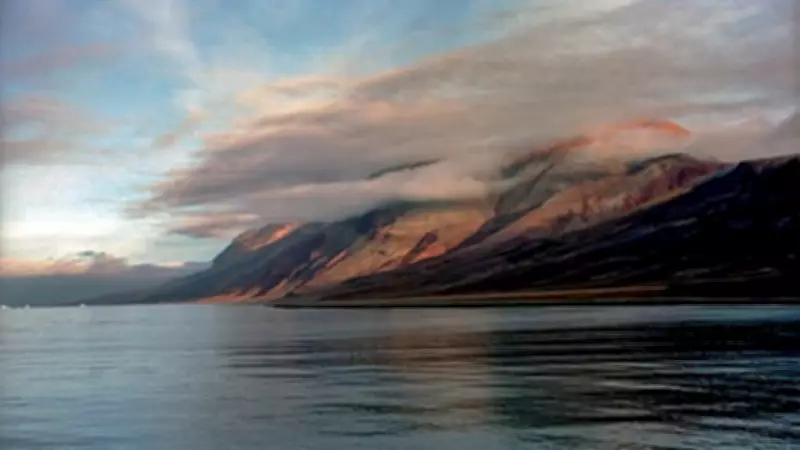
Northeast Greenland National Park: The World's Largest Frozen Wilderness
Northeast Greenland National Park stands as a colossal testament to raw Arctic power, covering a staggering 972,000 square kilometres. This immense area makes it the world's largest national park, as confirmed by the Guinness Book of World Records, and it dwarfs Yellowstone National Park by over 100 times, with Yellowstone spanning only 8,991 km². Established in 1974 and expanded in 1988, the park preserves the wild northeastern region of Greenland, stretching from Liverpool Land to Peary Land, and serves as a critical hub for scientific exploration in one of Earth's most remote environments.
The Vast Scale and Formation
The park's creation was driven by the need to protect this frozen landscape for scientific study, as outlined in the Executive Order no. 7 of Greenland Home Rule from 1992, which states: "Protection of landscapes... is the overall objective." Experts highlight that its vastness is invaluable for conducting important research in the Arctic region, offering unparalleled opportunities to study climate dynamics and ecosystem changes in an area where no permanent human residents exist.
Ice-Dominated Landscapes and Features
Dominating the park is the Greenland Ice Sheet, with ice-free coasts and the Peary Land area as rare exceptions. Glaciers shape the terrain, carving out fjords and sheer cliffs that define this frozen expanse. Key features include:
- Mountain ranges such as the Roosevelt Range, Stauning Alps, and Halle Range.
- Surrounding features like Scoresby Sund, Kong Oscar Fjord, and Kejser Franz Joseph Fjord.
- Ice flows from the interior, including the fast-flowing Northeast Greenland Ice Stream (NEGIS), The Gully, Sefstrom, and Hamberg Glacier.

The Haunting Iceberg Graveyard
In Kjerulf Fjord, explorers have dubbed it the 'Iceberg Graveyard', where winds and currents strand massive icebergs, piling them up into a haunting seascape. These giants, calved from nearby glaciers, slowly melt in the shallows, dwarfing small boats and serving as a stark reminder of ice's immense power. This spot mesmerises those who venture into the park's coastal reaches, offering a unique glimpse into nature's frozen artistry.
Thriving Arctic Wildlife
Despite the harsh environment, the park teems with wildlife, preserved under strict regulations that prohibit disturbance. Key species include:
- Polar bears inhabiting coastal regions.
- One of the world’s largest populations of musk oxen in ice-free zones.
- Walruses, Arctic foxes, hares, Arctic wolves, seals, and whales, though some are rarely found.
- Birds such as gyrfalcons, snowy owls, and ptarmigan that nest during the summer.
Climate Research Frontiers
The park is a frontier for climate science, with the Zackenberg Ecological Research Operations (ZERO) station hosting rotating teams of scientists each year. Since 1995, BioBasis monitoring has collected data for over 50 years to study ecosystem changes driven by climate change. Studies published in Nature reveal insights such as the Northeast Greenland Ice Stream’s retreat due to warming seas since 21.6 ka BP, with grounding lines found up to 100 km inland. Ice cores from the park hold historical climate data, helping scientists predict rapid changes in this sensitive area.
Human Absence and Strict Regulations
No permanent residents call this park home; only patrol stations like Daneborg and the Sirius Patrol enforce strict rules. Regulations include:
- Strict aviation and environmental restrictions.
- A mandate that all waste must be brought back, as per the 1992 order: "Waste... must be brought back."

Enduring Arctic Wilderness
Since its establishment as a protected area in 1977, Northeast Greenland National Park has preserved one of the most untouched Arctic environments on Earth, safeguarding prehistoric sites and untamed beauty. From musk ox herds to iceberg graveyards, it mesmerises all who explore it. The climate research conducted here influences global understanding, making this ice giant a call to the brave and a vital resource for our planet's future.





