The India Meteorological Department (IMD) has forecast a gradual easing of the intense cold spell gripping North India, with relief expected after 14 January. This comes as a respite for residents of Rajasthan, Punjab, Haryana, Delhi, Himachal Pradesh, and Uttarakhand, who have been battling severe cold wave conditions.
Severe Cold to Persist Before Relief Arrives
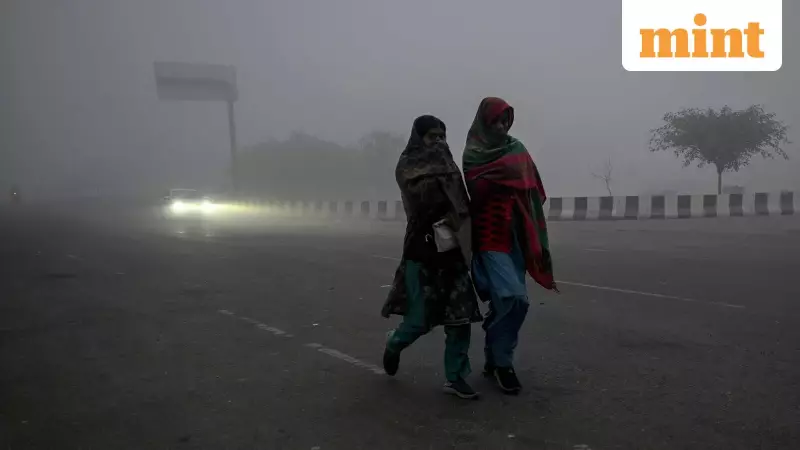
According to the latest IMD update, cold wave to severe cold wave conditions are very likely to continue over Rajasthan, Punjab, Haryana, Delhi, Himachal Pradesh, and Uttarakhand on 12-13 January. Isolated pockets may experience cold wave conditions on 14 January, with a significant reduction anticipated thereafter.
The severity of the chill was highlighted in the national capital. On 11 January 2026, the Palam observatory in Delhi recorded a minimum temperature of 3.0°C. This marks the second-lowest minimum temperature for the station since 2010, only behind the 2.6°C recorded on 7 January 2013. The all-time record low for Palam remains -2.2°C, set on 11 January 1967.

Widespread Chill and Dense Fog Forecast
Over the 24 hours ending at 8:30 am on Sunday, cold conditions prevailed across large swathes of northern and central India. Minimum temperatures plunged below freezing point (0°C) at many places in Jammu-Kashmir-Ladakh-Gilgit-Baltistan-Muzaffarabad, several locations in Himachal Pradesh, and isolated areas of Uttarakhand.
Other regions recorded notably low readings:
- 1°C to 5°C: Recorded at a few places in Punjab, Haryana, Chandigarh, Delhi, and North Rajasthan.
- 5°C to 10°C: Observed in several parts of Uttar Pradesh, Madhya Pradesh, Odisha, Bihar, Gujarat, and East Rajasthan.
- Isolated pockets in Chhattisgarh, Jharkhand, West Bengal, Sikkim, Assam, Meghalaya, and Maharashtra also experienced low temperatures.
The IMD has warned that dense fog conditions are likely to persist during morning hours over North-West India and Bihar for the next five days. Additionally, cold day conditions are expected in isolated parts of Bihar from 11 to 16 January.
Impact on Rabi Crops and Sowing Trends
The IMD has issued an agromet advisory for farmers in the affected regions. It suggests that farmers in Himachal Pradesh, Uttarakhand, Punjab, Haryana, West Uttar Pradesh, and Rajasthan should apply light and frequent irrigation to standing crops during evening hours to protect them from low-temperature stress or cold injury.
However, agricultural scientists indicate that the cold and fog have not yet caused significant damage. No incidents of frost, which is particularly harmful to crops, have been reported so far. Officials are optimistic about the winter harvest.
"We are expecting a good harvest this year, as there has been an increase in rabi acreage," said D.K. Yadava, Deputy Director General (Crop Science) at the Indian Council of Agricultural Research (ICAR).
Data from the Ministry of Agriculture and Farmers' Welfare supports this outlook. As of 2 January 2026, India's rabi (winter) crop sowing for the 2025-26 season has covered 63.41 million hectares. This is an increase of over 1.64 million hectares compared to the previous year, representing a growth of 2.65%. The season's average coverage is 63.78 million hectares.
The expansion in sown area is broad-based:
- Wheat coverage increased by 613,000 hectares.
- Rice area rose by 267,000 hectares.
- Pulses saw an overall increase of 344,000 hectares, driven largely by a sharp rise of 466,000 hectares under gram (chickpea).
- Oilseeds, led by rapeseed and mustard, expanded to 9.63 million hectares, up by 304,000 hectares from the previous year.
While the cold wave has been intense, the timely advisory from the IMD and the positive sowing data provide hope for the agricultural sector as the region awaits warmer days.