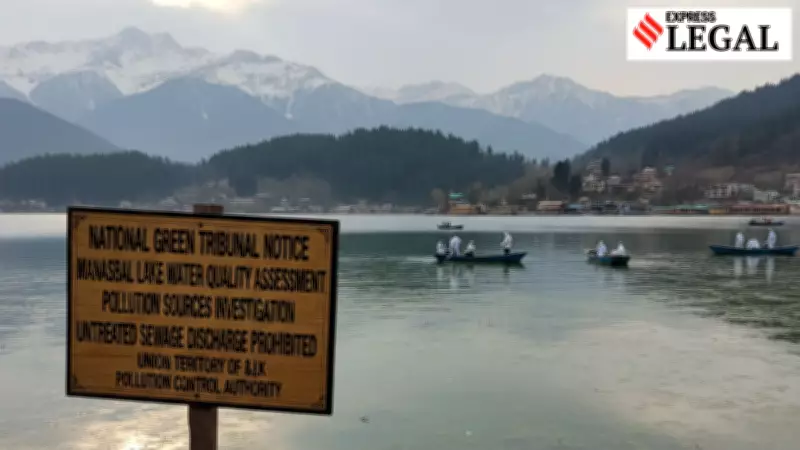
NGT Issues Urgent Notice Over 'Dying' Manasbal Lake: Why 14 Jammu and Kashmir Villages Are Under Scanner
The National Green Tribunal (NGT) has taken urgent cognizance of the deteriorating condition of Manasbal Lake in Jammu and Kashmir, issuing notices to authorities and directing immediate assessment of water quality and pollution sources. This action follows a plea filed by environmental activist Raja Muzaffar Bhat, highlighting the alleged discharge of untreated sewage into this ecologically fragile wetland.
NGT's Directives to Pollution Control Authorities
The principal bench of the NGT, comprising Justice Prakash Shrivastava and Dr A Senthil Vel, has issued specific directions in its January 30 order:
- The Central Pollution Control Board (CPCB) and Jammu and Kashmir Pollution Control Committee (J&KPCC) must ascertain the current status of water quality in Manasbal Wetland
- Authorities must identify all sources of pollutant and sewage discharge into the lake
- A comprehensive status and action taken report must be submitted at least one week before the next hearing date of April 22
- The applicant has been directed to serve all respondents and file an affidavit of service
The tribunal has asked the central government and Jammu and Kashmir administration to respond to these allegations and take necessary measures to protect the wetland ecosystem.

Allegations of Systematic Sewage Discharge
At the heart of this environmental concern lies the serious allegation that untreated domestic sewage from approximately 14 villages is being discharged into Manasbal Wetland through the Lar Canal in Ganderbal district. Environmental advocates argue that this continuous inflow of raw sewage has severely compromised water quality and threatens the long-term ecological sustainability of this important water body.
Advocate Rahul Choudhary, representing the applicant, emphasized that this situation reflects systemic governance failure. Despite Manasbal's recognized ecological importance, basic safeguards such as functional sewage treatment infrastructure remain either incomplete or ineffective. Photographic evidence presented to the tribunal reportedly shows visible sewage flow into the wetland, substantiating claims of ongoing pollution.
Protected Status and Ecological Significance
Manasbal Lake, often described as one of Kashmir's pristine freshwater bodies, plays a vital role in local ecology, fisheries, tourism, and groundwater recharge. The wetland holds multiple protected designations:
- Notified wetland under the Wetlands (Conservation and Management) Rules, 2017
- Included in the official list of Wetlands Outside Forest and Wildlife Protected Areas in Jammu and Kashmir
- Featured in the National Wetland Atlas, underscoring its ecological and hydrological significance
The applicant argued that given this protected status, continued discharge of untreated sewage amounts not only to environmental degradation but also to clear violation of statutory obligations imposed on authorities.
Scientific Evidence of Environmental Degradation
To substantiate environmental impact claims, reliance has been placed on a scientific study titled "Current Status of Macrophyte Diversity and Distribution in Manasbal Lake, Kashmir, India." This research highlights rapid proliferation of aquatic vegetation, attributing it to nutrient enrichment caused by domestic sewage, solid waste, and agricultural runoff.
The study warns that such eutrophication leads to drastic changes in species composition and lake ecology. Scientists note that increasing macrophyte vegetation indicates that lake water is receiving nutrients that aid abundant plant growth - a clear indicator of declining water quality and ecological stress. The research further cautions that continued nutrient loading could permanently alter the lake's natural character, making conservation and restoration far more difficult without timely intervention.

Infrastructure Gaps and Administrative Challenges
The environmental petition also references concerning reports about delayed infrastructure and weak institutional oversight. According to available information, a sewage treatment plant project launched nearly a decade ago remains incomplete, even as untreated sewage continues to enter the lake. While some progress has reportedly been made, the failure to operationalize this facility has rendered significant investments ineffective.
Additional concerns have been raised about administrative gaps, including the absence of a permanent chief executive officer in the Manasbal Development Authority. Interim administrative arrangements have allegedly hampered coordinated conservation efforts. Particular attention has been drawn to the Kondabal area, where unregulated construction, lack of sanitation facilities, and direct discharge of domestic waste are reportedly aggravating the lake's degradation.
Broader Legal Context and Supreme Court Mandates
Placing this issue in a wider legal framework, the applicant has relied on a Supreme Court judgment dated February 8, 2017, in M K Balakrishnan & Others v. Union of India, which mandates strict protection of all identified wetlands across the country. Since Manasbal is an identified and notified wetland, authorities are under constitutional and statutory duty to prevent pollution and ecological damage.
Environmental advocates argue that failure to protect Manasbal Lake undermines not only environmental law but also the fundamental right of future generations to a clean and healthy environment. The NGT's intervention represents a crucial step toward addressing these systemic environmental challenges in one of Jammu and Kashmir's most important wetland ecosystems.