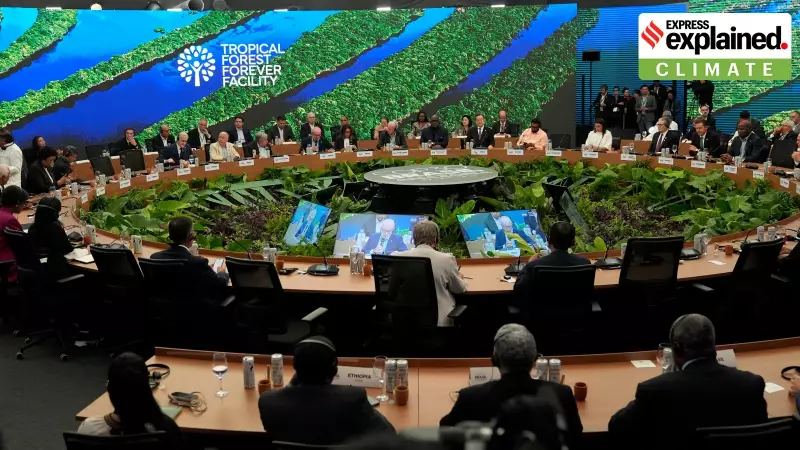
In a landmark move for global environmental conservation, a revolutionary financial initiative was unveiled during the COP30 climate summit in Belém, Brazil. The Tropical Forest Forever Facility (TFFF), a new fund with an ambitious target of $125 billion, promises to transform how the world values and protects its vital tropical forests.
Brazilian President Luiz Inácio Lula da Silva, speaking at the high-profile launch event on November 6, hailed the TFFF as "an unprecedented initiative." He powerfully declared that "for the first time, Global South countries will have protagonism in the forest agenda," marking a significant shift in the dynamics of global climate action.
What is the Tropical Forest Forever Facility?
The TFFF is designed as a permanent, self-sustaining investment fund. Its core mission is to generate financial returns that will be distributed as rewards to up to 74 developing tropical forest countries for preserving their existing old-growth forests.

The fund's financial architecture is two-tiered. It aims to raise an initial $25 billion from wealthy governments and philanthropic organizations. This capital will then be leveraged to attract an additional $100 billion in private investment. The combined pool of money will be invested in a diversified portfolio, including public and corporate market bonds.
The annual returns generated from these investments will be paid out to nations that successfully maintain their forest cover. A key feature of the TFFF is its reliance on satellite remote sensing data to track forest canopy cover annually, ensuring a low-cost and transparent method for verifying conservation efforts.
Initial contributions have already been pledged, demonstrating early international support. Brazil has committed $1 billion, while Colombia has pledged $250 million and Indonesia is contributing $1 billion. From Europe, Norway has promised $3 billion over a decade, the Netherlands has committed $5 million, and Portugal has offered 1 million euros.
The Driving Force Behind the TFFF's Creation
The fund addresses a fundamental economic flaw in the current global system: there is often more immediate market value for dead forests than for living ones. Activities like clearing land for monoculture crops such as soy are financially incentivized, while the immense benefits provided by standing forests—including carbon storage, temperature regulation, and wildlife habitat—are largely taken for granted and unpaid.
The TFFF is engineered to correct this market failure. By creating a permanent financial stream for conservation, it ensures that the value derived from keeping forests intact surpasses the value of cutting them down. This provides a direct economic incentive for landowners and nations to protect these critical ecosystems.
Echoing the President's sentiment, Marina Silva, Brazil’s Minister of the Environment and Climate Change, stated during the launch, "The launch of the TFFF at COP30 marks a turning point in the history of tropical forest conservation." She emphasized that it is the first global mechanism that formally recognizes the value of forest ecosystem services and provides permanent incentives for their preservation.
Expert Concerns and Critical Perspectives
Despite its ambitious goals, the TFFF has not been launched without skepticism. Several climate finance experts have raised significant concerns about its practical implementation and underlying principles.
A primary worry is the fund's vulnerability to the volatility of financial markets. Since the TFFF plans to invest heavily in bonds from developing nations, which are historically prone to fluctuations, its ability to provide consistent returns could be jeopardized by events like the 2008-09 financial crisis or the market crash during the COVID-19 pandemic. If the markets crash, payments to forest nations could dry up.

Another major criticism revolves around climate justice and the obligations of developed nations. Experts argue that the TFFF dilutes the legal and moral responsibility of wealthy countries to provide their fair share of nature and climate finance. This is because the fund operates outside the official framework of the UN Framework Convention on Climate Change (UNFCCC).
As it is not subject to the same rules that govern UN climate negotiations, where a clear onus falls on developed countries, the TFFF could be seen as letting them off the hook. Liane Schalatek, a noted climate finance expert, told Carbon Brief that the initiative risks "further undermining the financial mechanism of the UNFCCC and the Paris Agreement" by diverting attention from legally mandated public finance flows.
The success of the Tropical Forest Forever Facility now hinges on its ability to navigate these financial risks and establish itself as a credible, additional source of conservation finance, rather than a replacement for the climate debts owed by the developed world.