Israeli Prime Minister Netanyahu Issues Stark Warning on Iranian Threat to Europe
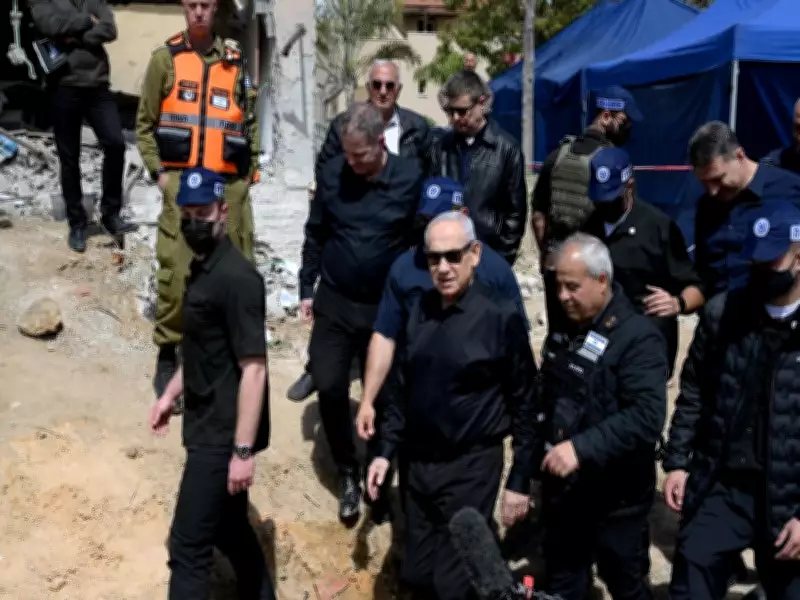
Israeli Prime Minister Benjamin Netanyahu has issued a grave warning, asserting that Iran now poses a direct and imminent threat to European countries. Speaking during a visit to the city of Arad, which was recently targeted by Iranian forces, Netanyahu emphasized the urgent need for global action against what he termed the "Ayatollah terror regime."
Netanyahu's Strong Condemnation of Iranian Actions
In a statement posted on the social media platform X, the Prime Minister's Office declared, "Iran continues to prove why they are an enemy to civilization and the free world, while now posing a direct threat to European countries. Israel and the U.S. will continue to act with great force against the Ayatollah terror regime." This message underscores the escalating tensions in the region and highlights the collaborative stance between Israel and the United States.
Netanyahu further elaborated on Iran's recent aggressive maneuvers during his visit to Dimona. He detailed three critical incidents that occurred within a 48-hour period, which he believes demonstrate Iran's disregard for international norms and human safety.

- Attack on Civilian Areas: Netanyahu reported that Iranian forces fired terror weapons at civilian locations, including a children's nursery and an old person's home in Arad. He accused Iran of using cluster bombs, which are prohibited under international law, thereby endangering innocent lives.
- Targeting Holy Sites in Jerusalem: The Prime Minister revealed that Iran launched ballistic missiles near Jerusalem, threatening sacred sites such as the Church of the Holy Sepulchre, the Al-Aqsa Mosque, and the Western Wall. These locations hold immense religious significance for Christianity, Islam, and Judaism, respectively.
- Long-Range Missile Launch: Netanyahu disclosed that Iran fired an intercontinental ballistic missile traveling 4,000 kilometers, which landed at Diego Garcia, a joint American-British military base. This action signals Iran's expanding military reach and capability.
Iran's Strategic Moves and Global Implications
Netanyahu emphasized that Iran's missile technology now enables it to reach almost every part of Europe, a development he has been cautioning about for years. Additionally, he highlighted Iran's attempt to blackmail the global community by threatening to shut down the Strait of Hormuz, a crucial maritime passage for oil transportation. "They are trying to blackmail the world with oil terror blackmail," Netanyahu stated, referring to this as the fourth aggressive act in just two days.
In his address, Netanyahu called upon world leaders, particularly those from free and moderate nations, to take decisive action. He echoed former US President Donald Trump's sentiments, urging international support for the US-Israel partnership in combating Iranian aggression. "President Trump has correctly said that Israel, the United States and Israel in this great partnership, we're fighting the battle not only for ourselves, but for all of you," Netanyahu remarked, questioning the delayed response from other countries.
Iranian Response and Regional Tensions
Meanwhile, Iranian President Masoud Pezeshkian responded to the escalating rhetoric by dismissing US and Israeli concerns. He criticized Trump's statements as desperate illusions and reaffirmed Iran's control over the Strait of Hormuz, stating it remains open to all nations except Iran's enemies. This exchange highlights the deepening rift and ongoing geopolitical struggle in the Middle East.
The situation remains volatile, with Netanyahu's warnings underscoring the potential for broader conflict if international efforts are not mobilized to counter Iranian threats. The Israeli leader's call to action reflects a critical moment in global security dynamics, urging a unified stance against regimes deemed hostile to civilization and free societies.