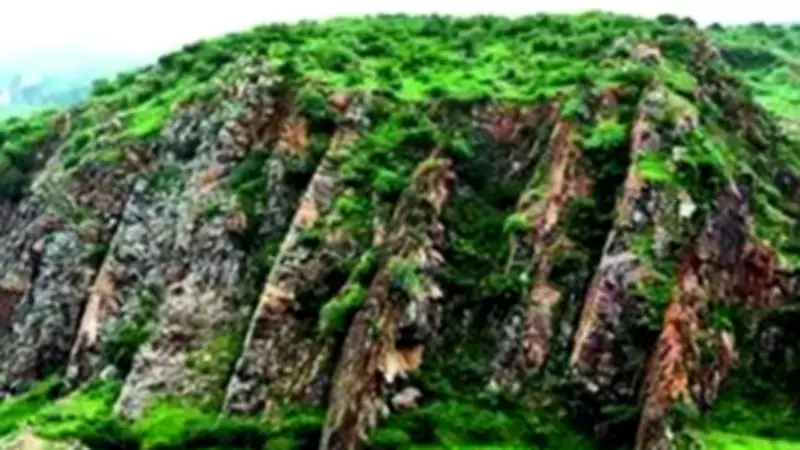
The NCR Regional Plan 2041 will retain the Natural Conservation Zone (NCZ), a crucial safeguard for protecting the Aravali range across the region, according to the agenda circulated for the NCR Planning Board's (NCRPB) meeting scheduled for June 16. This decision comes after nearly five years of deliberations, including repeated attempts by Haryana to replace NCZ with Natural Zone and to substitute references to the Aravali with the more generic term hills.
Agenda Details
The agenda circulated last week states that the Conservation Zone (NCZ) of RP-2021 will be retained in RP-2041. It emphasizes that all statutes, rules, notifications, and orders from the Ministry of Environment, Forest and Climate Change (MoEF&CC), other central government ministries and departments, as well as orders from the Supreme Court and high courts pertaining to NCZ, must be strictly followed by NCR constituents.
Background of Opposition
When the Draft Regional Plan released in December 2021 proposed replacing NCZ with Natural Zone, it triggered widespread opposition. The majority of the 4,519 objections and suggestions received were against the proposed change. Subsequently, the Prime Minister's Office (PMO) and a Group of Ministers led by Union Home Minister Amit Shah directed the Ministry of Housing and Urban Affairs to retain the NCZ provision, which exists in RP-2021, and not reduce NCR's geographical area. This development was first reported by TOI on July 12, 2024.

Protection Under RP-2021
As per RP-2021, it is mandatory for states to protect areas falling under NCZ, which include environmentally sensitive areas, extensions of the Aravali ridge, forest areas, rivers and tributaries, major lakes, and water bodies in NCR. The norm imposes severe restrictions on any non-forest activities in these areas, allowing construction of only up to 0.5% of the area for regional recreational activities, and that too with prior permission from the central government.
Concerns Over Ground Truthing
While retaining this provision will largely protect the Aravali and other eco-sensitive zones in NCR, the agenda mentions that the extent of natural features under NCZ will be identified, ascertained, and delineated by NCR participating states in accordance with the definition, using ground truthing and revenue records. Experts have expressed concern over this approach.
Independent forest analyst and senior fellow at CEDAR Chetan Agarwal stated, Despite keeping the new draft RP-2041 on hold for so many years, NCRPB has still not undertaken a satellite-based ground truthing as required by the National Green Tribunal in its 2021 order. They have also not made an existing land use map, an essential planning requirement that would provide real-time satellite-based clarity about the extent of construction and NCZ area loss. Instead, NCRPB has abdicated its responsibility and allowed states to continue a so-called ground-truthing of NCZ, which states such as Haryana have been doing since 2014 with no finality in sight.
Innovative Conservation Instruments
The agenda proposes that NCZ may be promoted and conserved with the help of innovative non-financial instruments such as Special Development Rights that may be made transferable and saleable to incentivize private and public landowners of such areas. It adds that Transferable and Saleable Development Rights for NCZ (NCZ-TDR) may be provided by respective NCR states.
Population Projections
TOI has learned that as per the revised estimate, the population in NCR would be around 10.86 crore by 2031 and 14.73 crore by 2041, compared to 7.87 crore in 2021. While Delhi's share of the NCR population would reduce from 26.2% in 2021 to 19.8%, Haryana's share is projected to rise steadily.
Regional Connectivity Improvements
For improving regional connectivity, the plan recommends expediting three new Namo Bharat RRTS corridors: Ghaziabad-Noida International Airport (Jewar), Gurgaon-Faridabad-Noida-Gr Noida, and Delhi-Surajpur, with a combined length of 178 km. It also takes note of the proposed three Orbital Rail Corridors (ORCs) to be developed based on feasibility. Haryana aims to complete ORC-I connecting Palwal-Sonipat, and the board has recommended Uttar Pradesh to develop an ORC connecting Palwal-Khurja-Meerut-Bagapat-Sonipat to complete the circle by 2030.