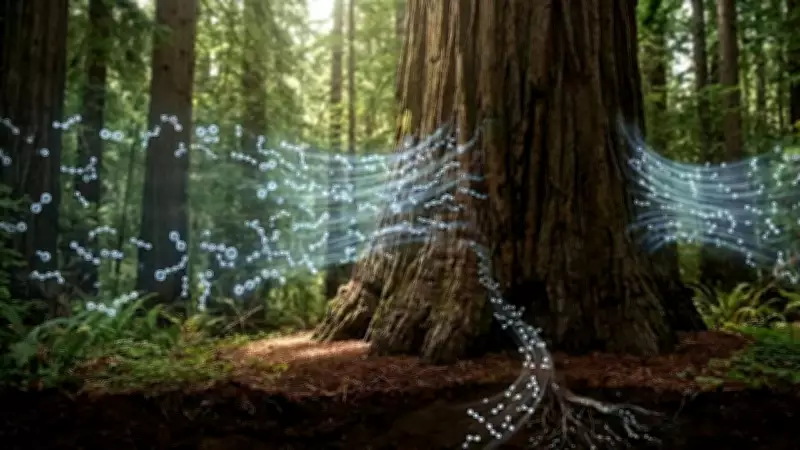
NASA Research Reveals Trees Are 'Solidified Air' Growing From Atmosphere
A groundbreaking discovery in botanical science has fundamentally altered our understanding of how trees grow and develop. Contrary to long-held beliefs that trees are primarily built from soil nutrients, new research from NASA reveals that the overwhelming majority of a tree's physical structure actually originates from the atmosphere.
The Atmospheric Origin of Tree Mass
NASA Earthdata research demonstrates that 95 to 98 percent of a tree's total dry weight comes directly from carbon and oxygen captured from the air. This means that while trees remain physically anchored in the earth, their substantial biomass is essentially "solidified air" created through the miraculous process of photosynthesis.
The USDA Forest Service reports that carbon alone constitutes approximately 50 percent of a dried tree's weight. This carbon mass isn't absorbed through roots but is instead captured from atmospheric carbon dioxide (CO2) by leaves. Using sunlight energy, trees cleave carbon-oxygen bonds, releasing oxygen back into the atmosphere while fixing carbon into organic molecules that eventually form wood.

How Photosynthesis Creates Solid Wood From Air
This biological transformation represents one of nature's most efficient engineering feats. The Journal of Biological Chemistry details how trees accomplish this air-to-wood conversion:
- During daylight hours, trees produce glucose from atmospheric carbon dioxide through photosynthesis
- At night, trees chemically join glucose molecules to create large polysaccharide chains
- These chains form cellulose and lignin - the primary structural components of wood
- The resulting solid polymeric structures create the rigid materials we recognize as tree trunks and branches
Essentially, trees act as complex atmospheric filters, reconfiguring gaseous carbon dioxide into solid, durable structures that can support massive physical forms.
The Limited Role of Soil in Tree Growth
While soil provides essential support and some nutrients, research from the National Science Foundation's NEON Program reveals that minerals transferred from soil - including nitrogen, phosphorus, and potassium - comprise less than 2 percent of a tree's total dry mass.
These trace elements serve crucial but limited functions:
- Providing molecular machinery for structural building
- Supplying chemicals necessary for enzyme function
- Enabling chemical signaling processes
- Facilitating the biological systems that process atmospheric gases
Without these soil-derived elements, trees couldn't function biologically, but they contribute minimally to the actual volume of wood that comprises a tree's substantial physical presence.
Carbon Storage and Environmental Impact
The US Department of Agriculture notes that a single mature tree can absorb more than 48 pounds of carbon dioxide annually, permanently converting that gas into wood fiber. This makes trees incredibly efficient carbon sequestration systems.
When a tree completes its life cycle, its biomass serves as a tangible record of atmospheric carbon removal. The soil primarily functions as a structural anchor rather than a significant mass source, meaning trees essentially grow downward from the air rather than upward from the ground.
This research fundamentally changes our perspective on forest ecosystems, revealing that the majestic structures we see in forests are largely atmospheric creations - nature's remarkable method of transforming air into solid, living architecture through the power of sunlight and biological ingenuity.