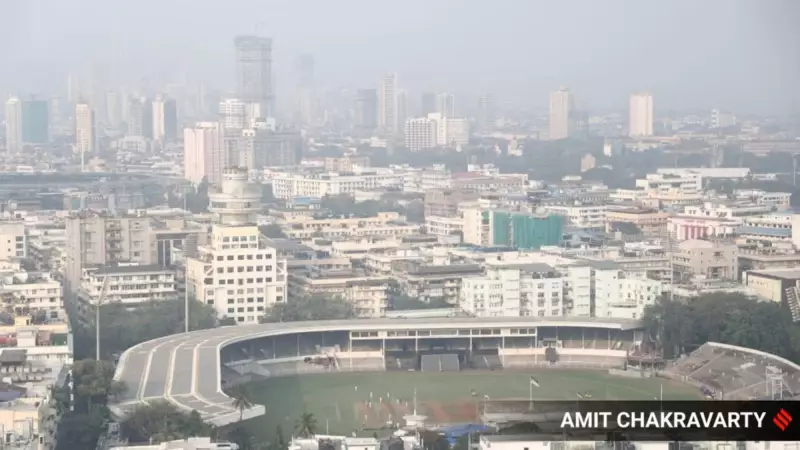
Mumbai Records Highest Unhealthy AQI Days in MMR for 2026
According to recent data from the Central Pollution Control Board (CPCB), Mumbai has emerged as the city with the maximum number of days registering an unhealthy Air Quality Index (AQI) in the Mumbai Metropolitan Region (MMR) for the year 2026 so far. This revelation comes amid criticism from the Bombay High Court directed at local governing bodies for their inability to effectively control air pollution in the area.
Detailed AQI Breakdown and Comparative Analysis
The CPCB dashboard categorizes AQI readings as follows: 0-50 is good, 51-100 satisfactory, 101-200 moderate, 201-300 poor, 301-400 very poor, and above 400 severe. Between January 1 and 24, 2026, Mumbai recorded 18 days where the AQI fell into the unhealthy range, specifically within the moderate category of 120 to 150. This level is considered particularly harmful for sensitive groups, including children and senior citizens.
In contrast, during the same 24-day period, Mumbai managed only six days of satisfactory AQI. When compared to neighboring regions:

- Navi Mumbai reported 15 days of unhealthy AQI and 9 days satisfactory.
- Vasai-Virar had 13 days unhealthy and 10 days satisfactory.
- Thane recorded 12 days unhealthy and 12 days satisfactory.
- Mira Bhayander saw 13 days unhealthy and 9 days satisfactory.
This data underscores Mumbai's leading position in poor air quality metrics within the MMR.
Primary Causes and Contributing Factors
Officials from the Brihanmumbai Municipal Corporation (BMC) and the Maharashtra Pollution Control Board (MPCB) have pinpointed several man-made factors driving pollution. Vehicular emissions stand out as the main culprit, attributed to Mumbai's highest vehicular density in the MMR. Additionally, significant construction activities for both private and public projects have exacerbated dust displacement, further deteriorating AQI levels.
Another critical aspect is the monitoring infrastructure. Mumbai currently operates 28 AQI monitoring stations, far more than other areas: Thane has two, Navi Mumbai six, and Virar and Mira Bhayander only one each. An MPCB official noted that intense monitoring in Mumbai might partially explain the higher reported numbers, as less monitored regions like Thane or Bhayander could be underreporting due to inadequate stations.
Expansion of Monitoring and Mitigation Efforts
To address these gaps, authorities are augmenting the AQI monitoring network. Plans are underway to install three additional stations in each district of Thane, Vasai-Virar, and Kalyan-Dombivali, with two more in Mira-Bhayander, Ulhasnagar, and Bhiwandi Nizampur. Each station costs approximately Rs 9 crore, and work orders have been issued for phased delivery starting next month. Officials aim to have these stations operational before winter, when AQI typically worsens, enabling better monitoring and targeted mitigation strategies.
This expansion is part of a broader state-wide initiative to install over 50 monitoring stations across Maharashtra, enhancing overall air quality management.
Climatological Challenges and Expert Insights
Historically, Mumbai's coastal location near the Arabian Sea provided a natural advantage through quicker wind reversals that cleared atmospheric pollutants. However, experts warn that global climate change has slowed these processes, turning this geographical benefit into a disadvantage. Dr. Gufran Beig, an atmospheric scientist, explained that slow air reversal and Mumbai's proximity to the western coast make it vulnerable to dust particles from the Thar desert and humid air from the Middle East.
Dr. Sachida Nand Tripathi, another atmospheric scientist, added that while sea breezes help disperse pollutants to some extent, Mumbai is also impacted by emissions from surrounding satellite districts like Thane and Kalyan-Dombivali, where economic activities contribute significantly. Factors such as vehicular emissions and regional transport further compound the issue, highlighting the complex interplay of local and global influences on Mumbai's air quality.