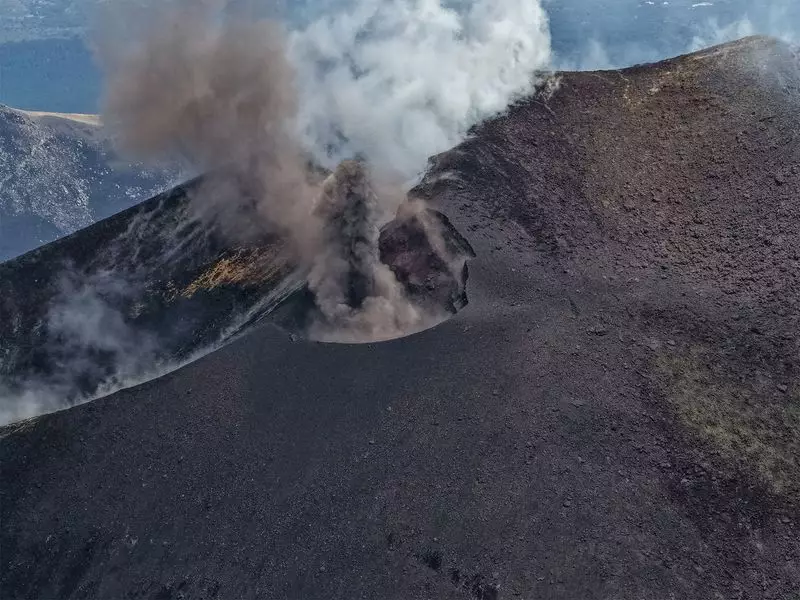
Italy's iconic Mount Etna, Europe's most active volcano, has roared back to life, sending plumes of ash and smoke into the Sicilian sky. The recent volcanic activity, characterized by sporadic explosions and light ash emissions, has drawn the attention of scientists and local authorities monitoring the situation.
Details of the Volcanic Activity
The renewed activity at Mount Etna was captured by surveillance cameras and reported by Italy's National Institute of Geophysics and Volcanology (INGV). The institute's observatory in Catania documented the events, noting that the volcano's Voragine crater was the primary source of the emissions. The activity involved the release of volcanic ash, which was dispersed by winds towards the northeast.
While the eruption did not produce lava flows, it was marked by sporadic explosive activity and the emission of a light ash cloud. This type of event is known as a Strombolian eruption, typical for Etna, involving bursts of gas and volcanic material. The INGV continues to monitor the volcano's parameters, including seismic activity and ground deformation, around the clock.

Impact and Local Response
The ash fall, though described as light, has the potential to cause minor disruptions. Volcanic ash can affect air quality, reduce visibility, and damage infrastructure and machinery. Residents in nearby towns are accustomed to Etna's moods, but authorities remain vigilant. No immediate evacuations or major disruptions to air traffic at the nearby Catania airport have been reported from this specific event.
However, the situation serves as a potent reminder of the dynamic and unpredictable nature of Mount Etna. The volcano, standing at over 3,300 meters, is in a near-constant state of activity. Its eruptions have shaped the landscape and culture of Sicily for millennia. The INGV's meticulous monitoring is crucial for providing early warnings and ensuring public safety.
Understanding Mount Etna's Significance
Mount Etna is not just a local landmark; it is a UNESCO World Heritage Site and a natural laboratory for volcanologists worldwide. Its frequent eruptions offer invaluable data for understanding volcanic processes. The current phase of ash emission and explosions is part of the volcano's normal cyclical behavior. Experts analyze these patterns to better predict more significant eruptive phases.
The recent activity underscores the delicate balance between the risks and benefits of living near an active volcano. The fertile volcanic soils support extensive agriculture, particularly vineyards and orchards, which are central to Sicily's economy. Yet, the ever-present threat of a larger eruption looms, making continuous scientific observation and robust civil protection plans essential for the region's resilience.