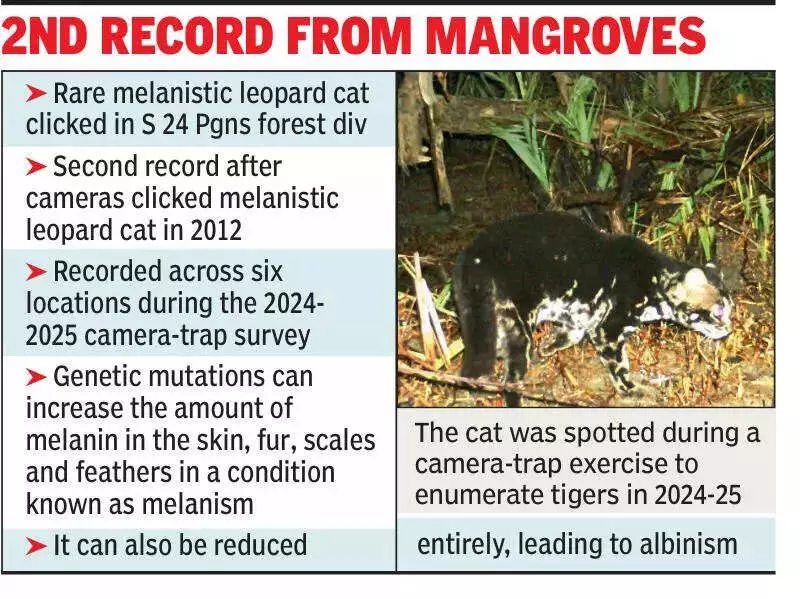
In an exciting discovery for Indian wildlife, forest officials have recorded images of an extremely rare melanistic leopard cat in the mangrove forests of the Sundarbans. The sighting occurred during the ongoing 2024-2025 camera-trap exercise primarily aimed at counting the region's tiger population.
A Rare Genetic Marvel Spotted
While meticulously scanning through thousands of images captured by hidden cameras, foresters were brought to a sudden halt. Their screens showed a sleek, completely black cat with a characteristically long tail, a creature rarely, if ever, seen in these unique mangroves. After cross-referencing the images with historical photographs and scientific literature, the animal was conclusively identified as a melanistic leopard cat (Prionailurus bengalensis).
Melanism is a genetic condition caused by a mutation that leads to an overproduction of the dark pigment melanin in the skin, fur, or scales of an animal. This results in an individual being much darker, or even completely black, compared to its normally patterned counterparts. Famous examples in the cat family include the black panthers (leopards or jaguars) and the melanistic tigers of Similipal in Odisha.

Wider Distribution and Nocturnal Habits Revealed
The significance of this discovery is amplified by its scale. Rajendra Jakhar, Field Director of the Sundarbans Tiger Reserve and a co-author of the study published in the international conservation journal Oryx, provided crucial insights. "Recorded across six locations during the 2024-2025 camera-trap survey, these images reveal a wider distribution of this rare morph than previously known," Jakhar stated.
The report, co-authored by Deputy Field Director Justine Jones and research assistant Debojyoty Ghosh, also sheds light on the animal's behaviour. All the photographic evidence was captured between 7 PM and 3 AM, confirming the species' nocturnal nature. "The times of the photographs indicate nocturnal activity, aligning with the known behaviour of leopard cats, which are typically solitary, nocturnal hunters," Jakhar added. The images originated from six different spots within the South 24 Parganas forest division, suggesting these rare cats are more widespread in the reserve than earlier assumed.
Not the First, But a Confirming Discovery
While the new report terms this the first photographic documentation within the Sundarbans Biosphere Reserve, wildlife experts note a precedent. Anurag Danda, head of WWF-India's Sundarbans chapter, recalled that a similar melanistic leopard cat was camera-trapped way back in February 2012 during the first comprehensive camera-trap exercise in the Indian Sundarbans.
Danda clarified that such sightings, while rare, are not biologically unusual. "This is not unusual since the offsprings of the leopard cat/s carrying the melanistic trait can well turn out to be melanistic, too," he explained. The 2024-25 findings thus represent a vital confirmation of the continued presence and persistence of this genetic variant in the challenging mangrove habitat.
The discovery underscores the rich and often hidden biodiversity of the Sundarbans ecosystem. It highlights how dedicated long-term monitoring efforts, like tiger censuses, can yield unexpected and valuable data about other elusive species, proving the resilience of wildlife even under significant habitat pressures.