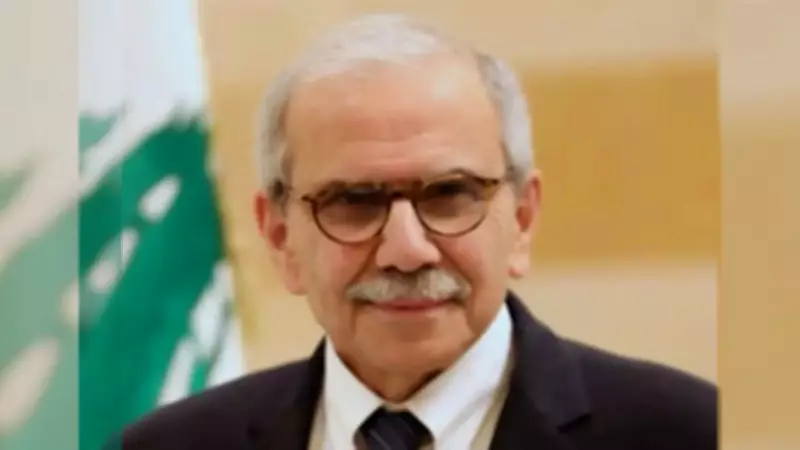
Lebanon's Prime Minister Delays Key Diplomatic Mission to Focus on Domestic Security
Lebanese Prime Minister Nawaf Salam has officially announced the postponement of his scheduled diplomatic visit to the United States and the United Nations headquarters. The decision, communicated through a post on the social media platform X, was attributed to pressing internal circumstances requiring his immediate attention in Beirut.
"In light of the current internal circumstances... I have decided to postpone my trip to the United Nations and the United States," stated Prime Minister Salam. He emphasized his commitment to remaining in the capital to oversee government operations and prioritize "the security of the Lebanese people and their unity." This visit was anticipated to be a significant diplomatic engagement, including planned meetings with high-ranking U.S. officials such as Secretary of State Marco Rubio.
Escalating Regional Tensions and Iran's Warning
The postponement occurs against a backdrop of heightened regional instability and escalating tensions involving Hezbollah. Iran has issued a stern warning to the Lebanese government, cautioning against marginalizing Hezbollah in forthcoming discussions with Israel. An adviser to Iran's Supreme Leader explicitly warned that neglecting the group's role could lead to "irreparable security risks" for Lebanon, as reported by the New York Post.

Concurrently, pro-Hezbollah demonstrations have erupted in Beirut, where protesters burned effigies of Prime Minister Salam, accusing him of aligning with Israeli interests. Iran's foreign ministry spokesperson, Esmaeil Baqaei, confirmed that Tehran maintains continuous communication with Lebanese authorities to monitor ceasefire commitments while also highlighting ongoing violations on the ground.
Persistent Hostilities Despite Ceasefire Efforts
Israeli military strikes continue to target locations across Lebanon, resulting in significant casualties. Recent attacks have claimed at least 14 lives, bringing the total death toll close to 1,950, according to official Lebanese sources. Israel maintains that its operations against Hezbollah are distinct from broader ceasefire negotiations involving Iran, further complicating diplomatic efforts to achieve regional stability.
Fragile Diplomacy and Expanding Conflict Scope
The diplomatic landscape remains precarious, with recent U.S.-Iran talks in Islamabad concluding without agreement after 21 hours of negotiations, as confirmed by Vice President J.D. Vance. The conflict, which originated from U.S. and Israeli strikes on Iran in February, has expanded to include Hezbollah's involvement in Lebanon and has disrupted global energy markets, particularly through heightened tensions around the strategic Strait of Hormuz.
Despite Prime Minister Salam's decision to delay his travel, discussions between Lebanese and Israeli representatives are still expected to proceed in Washington. However, the outcome of these talks remains highly uncertain due to persistent hostilities and profound mistrust between the involved parties, casting a shadow over prospects for near-term resolution.