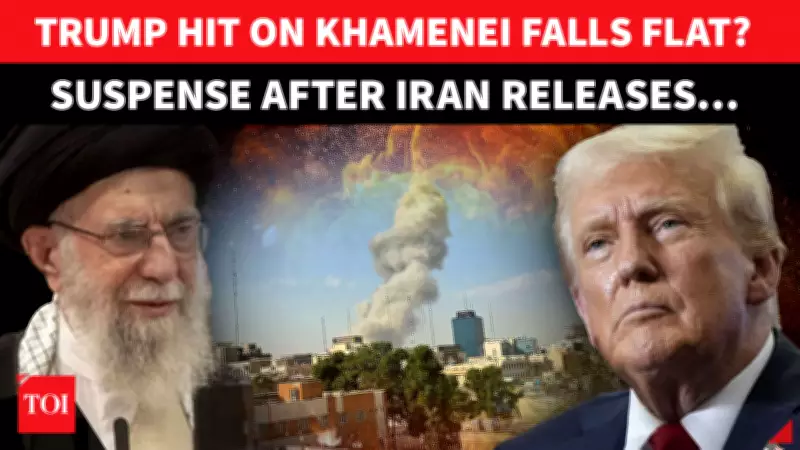
Iran's Supreme Leader Khamenei's Whereabouts Unknown After US-Israel Strikes in Tehran
Speculation surrounding the location of Iran's Supreme Leader Ayatollah Ali Khamenei has intensified dramatically following a series of coordinated military strikes by the United States and Israel in Tehran. The strikes, which targeted key locations in the Iranian capital, have raised urgent questions about the safety and current position of the country's highest-ranking political and religious authority.
Strikes Target Khamenei's Office Complex
One of the initial strikes reportedly impacted an area in close proximity to the official offices of Supreme Leader Ayatollah Ali Khamenei. The precision of the attack has fueled widespread concern and uncertainty within Iran's political and military circles. At the time of the explosions, it was not immediately clear whether Khamenei was present at the site or had been relocated to a secure, undisclosed location as a precautionary measure.
The Supreme Leader has not been seen in public for several days, adding to the growing mystery and prompting intense international scrutiny. His absence from the public eye coincides with a period of escalating regional tensions and direct military confrontations involving Iranian forces and their adversaries.

Official Statements Provide Limited Clarity
In response to mounting inquiries, Iranian Foreign Minister Abbas Araghchi addressed the situation in a statement to NBC News. Araghchi confirmed that, to the best of his knowledge, both Supreme Leader Ayatollah Khamenei and President Masoud Pezeshkian are alive. However, the statement stopped short of revealing their precise locations or providing any details about their security arrangements following the attacks.
The carefully worded assurance, "as far as I know," has done little to quell the rampant speculation and has instead highlighted the opaque nature of Iran's internal security protocols during a crisis. The lack of visual confirmation or a public appearance by Khamenei continues to be a focal point for analysts and foreign governments monitoring the situation.
Context of Escalating Regional Conflict
The strikes on Tehran are part of a broader and rapidly intensifying conflict between Iran and a coalition led by the United States and Israel. Recent developments include:
- Large-scale aerial bombardments targeting Iranian military and governmental infrastructure.
- Retaliatory missile launches by Iran against American bases in the Middle East, including locations in Bahrain and Qatar.
- Public vows of revenge from the Islamic Revolutionary Guard Corps (IRGC) following casualties.
- Increased diplomatic and military mobilization by regional powers, including Saudi Arabia and other Gulf states.
This volatile environment underscores the high stakes involved in the uncertainty surrounding Khamenei's whereabouts. The Supreme Leader's role is pivotal in Iran's strategic decisions, and his perceived vulnerability could have significant implications for the country's command structure and its responses to ongoing hostilities.
As the situation develops, the international community remains watchful for any official updates or appearances that might clarify the status of Iran's leadership. The ambiguity persists, leaving a critical gap in the understanding of Iran's immediate political stability amid the chaos of conflict.