Iran's Supreme Leader Issues Stark Warning Amid Escalating Gulf Tensions
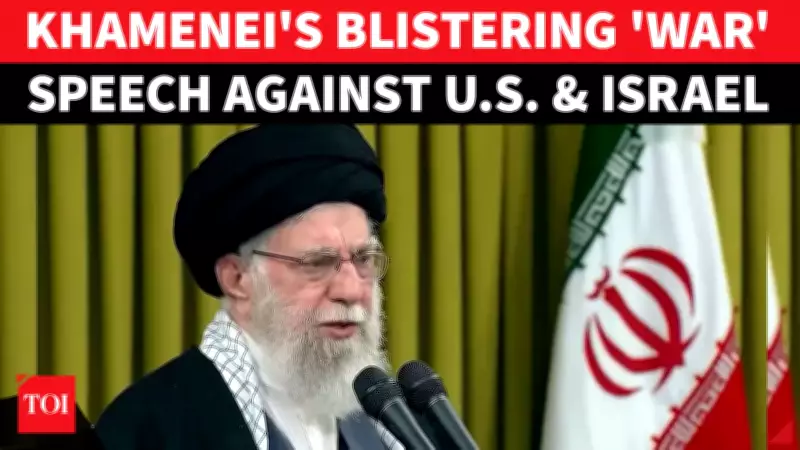
Iran's Supreme Leader Ayatollah Ali Khamenei has delivered a forceful warning to the United States, stating that any American military action against Iran would trigger a regional war with potentially devastating consequences. The warning comes amid significant US military deployments in the Persian Gulf region that have heightened tensions between the long-standing adversaries.
"Americans Should Know This Will Be a Regional War"
During a televised address broadcast on Iranian state television, Khamenei declared, "The Americans should know that if they start a war, this time it will be a regional war." The statement represents one of the most direct threats from Iran's highest authority in recent months as military posturing intensifies in the strategically vital waterway.
The warning follows reports of substantial US military reinforcements in the Gulf, including additional naval assets and air defense systems. Analysts suggest these deployments represent Washington's most significant military buildup in the region since tensions peaked several years ago.

Escalating Military Posturing in Strategic Waterway
The Persian Gulf remains one of the world's most critical maritime corridors, with approximately one-third of global seaborne oil passing through its waters. The increased military presence by both US and Iranian forces has raised concerns about potential miscalculations that could spiral into broader conflict.
Iran has responded to the US deployments with its own military exercises and demonstrations of force, including:
- Showcasing advanced missile systems capable of targeting regional bases
- Conducting naval drills in strategic choke points
- Displaying military hardware in public demonstrations
Historical Context of US-Iran Tensions
The current escalation continues a pattern of heightened tensions between Tehran and Washington that has persisted for decades. Relations have deteriorated significantly in recent years following:
- The US withdrawal from the Iran nuclear deal in 2018
- Multiple incidents involving commercial shipping in Gulf waters
- Targeted strikes against Iranian military commanders
- Ongoing disputes over Iran's nuclear program
Khamenei's warning represents a calculated response to what Iranian officials characterize as increasingly aggressive American posturing in their immediate neighborhood. The supreme leader's statements are typically interpreted as reflecting the position of Iran's entire security establishment.
Regional Implications and International Response
The prospect of regional conflict has alarmed neighboring countries and international stakeholders who depend on Gulf stability for energy security. Several regional powers have called for de-escalation while simultaneously strengthening their own defensive capabilities.
European nations, Russia, and China have all expressed concern about the rising tensions, with diplomatic efforts reportedly underway to prevent further escalation. However, the fundamental disagreements between Washington and Tehran over Iran's regional activities and nuclear ambitions continue to obstruct meaningful dialogue.
As military assets concentrate in the confined waters of the Persian Gulf, the risk of accidental clashes increases substantially. Both sides have demonstrated willingness to engage in limited confrontations while attempting to avoid all-out war, but Khamenei's latest warning suggests Iran's red lines may be hardening.
The situation remains fluid, with international observers closely monitoring developments in what has become one of the world's most volatile geopolitical flashpoints.