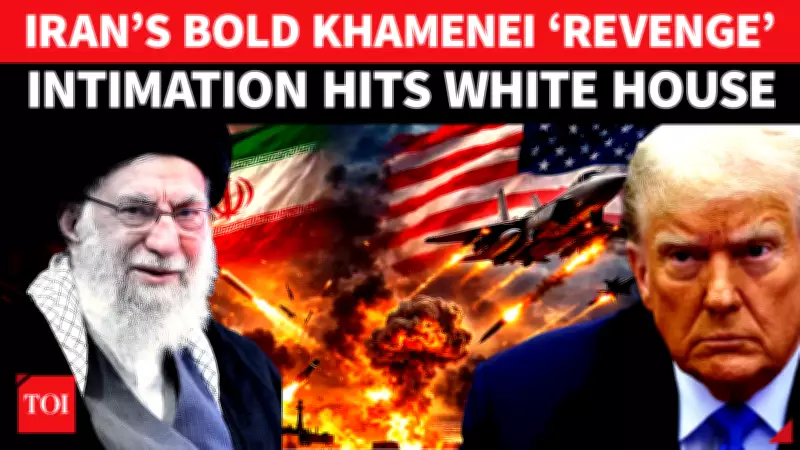
Iran's Security Chief Issues Stark Warning to United States Amid Escalating Tensions
In a dramatic escalation of regional hostilities, Iran's influential security chief Ali Larijani has delivered a blistering warning to Washington, declaring Tehran's readiness for a prolonged and punishing war. This fiery statement comes in the volatile aftermath of the killing of Iran's Supreme Leader, Ayatollah Ali Khamenei, which has sent shockwaves through the Middle East and intensified existing conflicts across multiple fronts.
Larijani's Defiant Rhetoric Targets US Leadership
During a high-profile address, Larijani launched a scathing attack on US President Donald Trump, accusing him of exacerbating regional chaos through what he termed "delusional fantasies." The Iranian security official argued that Trump has fundamentally betrayed his own "America First" foreign policy doctrine, instead prioritizing Israeli interests above American security concerns. This represents a significant hardening of Iran's diplomatic posture toward the United States.
Complete Rejection of Diplomatic Engagement
In perhaps his most consequential declaration, Larijani flatly rejected any possibility of renewed negotiations with American officials. He explicitly stated that Iran will not engage in diplomatic talks with the United States under current circumstances, dismissing recent reports suggesting potential backchannel communications. This position signals a major setback for international efforts to de-escalate tensions through dialogue.

Iran's Preparedness for Sustained Conflict
The security chief emphasized Tehran's comprehensive military and strategic readiness for what he described as an extended confrontation. Larijani vowed that Iran would fight fiercely regardless of the human or material costs involved, suggesting a willingness to endure significant sacrifices in pursuit of its strategic objectives. This rhetoric aligns with Iran's recent military actions across the region, including:
- Missile attacks targeting Israeli cities
- Strikes against US military assets and bases
- Support for proxy forces throughout the Middle East
Regional Context and Broader Implications
Larijani's warning emerges against a backdrop of intensifying violence across the Middle East. Recent developments include:
- Iranian missile bombardments targeting Tel Aviv and Jerusalem
- Attacks on US diplomatic facilities in Pakistan following Khamenei's killing
- Iranian strikes against American military bases in Gulf nations
- Heightened naval tensions in the Persian Gulf region
The security chief's statements reflect Iran's determination to respond forcefully to what it perceives as American aggression, particularly following the elimination of its supreme leader. This posture suggests that Tehran is prepared to escalate the conflict further, potentially drawing additional regional actors into the confrontation.
As the situation continues to deteriorate, Larijani's warning represents a clear signal that Iran views itself as engaged in an existential struggle with the United States and its allies. The rejection of diplomacy combined with promises of sustained military resistance indicates that the Middle East conflict may be entering a new, more dangerous phase with potentially global ramifications.