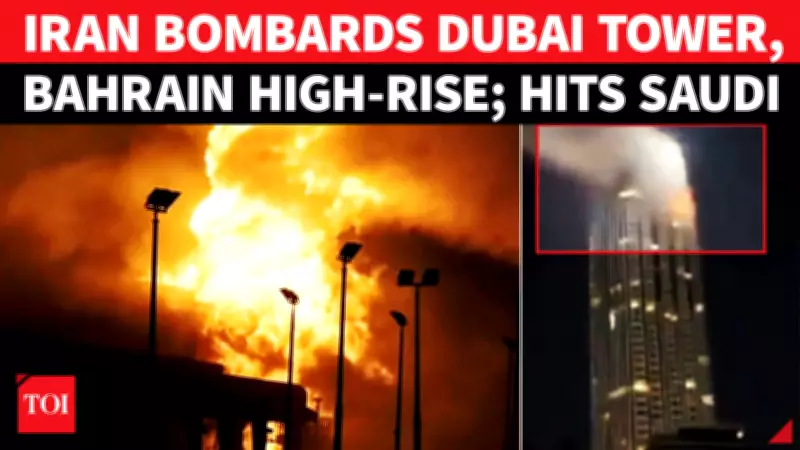
Iran Unleashes Coordinated Strikes Across Gulf Region, Targeting Key US Allies
In a dramatic escalation of hostilities, Iran has unleashed a new wave of drone and missile attacks targeting four key US-allied nations in the Gulf region: Saudi Arabia, Kuwait, Bahrain, and the United Arab Emirates. The coordinated strikes, which occurred on March 12, 2026, mark a significant intensification of the ongoing Iran vs US-Israel conflict, raising immediate fears that the war could spiral into a wider regional confrontation.
Major Cities and Strategic Sites Under Fire
The Iranian offensive specifically targeted major urban centers and critical energy infrastructure across the Gulf. Reports confirm that a prominent tower in Dubai and a high-rise building in Bahrain were set ablaze following direct hits, while the diplomatic quarter in Saudi Arabia also came under attack. Although air defense systems in the affected countries managed to intercept several incoming threats, some strikes penetrated defenses, resulting in visible fires and causing injuries among civilians and personnel.
This multi-nation assault represents one of the most aggressive moves by Iran in the current conflict timeline, directly challenging the security apparatus of US partners in the region. The timing and coordination of the attacks suggest a calculated effort to demonstrate Iran's military reach and to pressure allied nations supporting US and Israeli positions.

Escalation Triggers Regional Security Alarms
The strikes have triggered heightened security alerts across the Gulf, with governments reinforcing air defenses and issuing public safety advisories. The targeting of diplomatic zones and commercial hubs like Dubai—a global business center—underscores the conflict's expanding geographical scope beyond traditional battlefields.
Analysts warn that this escalation could have severe implications for global oil markets and regional stability, given the Gulf's role as a critical energy corridor. The attacks on strategic sites threaten to disrupt oil and gas operations, potentially impacting international supply chains and economic stability.
Broader Conflict Context and International Reactions
This latest offensive follows a series of provocations and retaliations in the Iran-US-Israel standoff, including previous Iranian threats to block the Strait of Hormuz—a vital oil transit route. The coordinated nature of the strikes indicates a shift toward more aggressive, multi-front engagements, moving beyond proxy conflicts to direct state-on-state hostilities.
International observers are closely monitoring the situation, with concerns mounting over the potential for miscalculation or further escalation that could draw in additional regional actors. The attacks have already sparked urgent diplomatic consultations among Gulf Cooperation Council members and their Western allies, focusing on collective defense measures and de-escalation strategies.
As tensions continue to rise, the Gulf region faces an increasingly volatile security environment, with the latest strikes serving as a stark reminder of the conflict's capacity to ignite broader regional warfare. The coming days will be critical in determining whether diplomatic channels can curb the escalation or if further military confrontations are imminent.