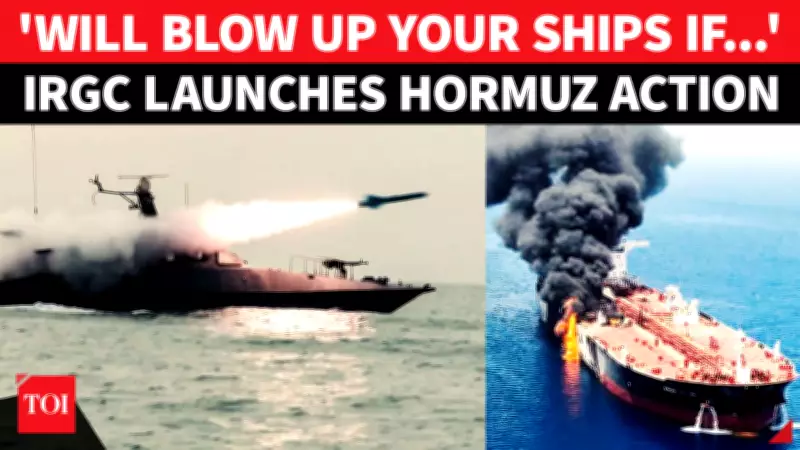
Iran's IRGC Mines Critical Global Oil Chokepoint, Defying U.S. Warnings
Tensions have dramatically escalated in the strategically vital Strait of Hormuz following confirmed reports that Iran's Islamic Revolutionary Guard Corps (IRGC) has deployed naval mines in the waterway. This provocative action directly threatens the global energy supply chain, as the strait serves as a crucial transit route for nearly one-fifth of the world's oil and liquefied natural gas (LNG) shipments. The mining operation represents a significant escalation in the ongoing conflict involving the United States and its allies, primarily Israel, and has already begun to disrupt maritime traffic in the region.
Limited Initial Deployment with Potential for Rapid Expansion
According to intelligence sources, the mining activity is currently limited in scope. However, analysts warn that Iran possesses the capability to rapidly expand this operation, potentially laying hundreds of mines that could cripple commercial shipping. The Strait of Hormuz, a narrow passage between the Persian Gulf and the Gulf of Oman, is only 21 nautical miles wide at its narrowest point, making it exceptionally vulnerable to such asymmetric warfare tactics. Any sustained disruption here would have immediate and severe consequences for global energy markets, likely triggering a sharp spike in oil prices worldwide.
U.S. Military Response and Trump's Stern Warning
The United States has responded with decisive military action. U.S. Central Command has confirmed that American forces have already engaged and destroyed several Iranian minelaying vessels operating in the area. This forceful response underscores Washington's commitment to keeping the vital sea lanes open. Concurrently, former President Donald Trump, a key figure in the current geopolitical landscape, has issued a stark warning to Tehran, demanding the immediate removal of all naval mines. Trump's statement emphasized zero tolerance for actions that jeopardize international energy security and freedom of navigation.

This incident is not an isolated event but part of a broader, intensifying confrontation. The mining of the Strait of Hormuz follows a series of escalatory actions in the Middle East, including missile attacks and drone strikes linked to Iranian proxies. The international community is now on high alert, as a major disruption in this chokepoint could precipitate a full-blown global energy crisis. Shipping companies are reportedly reassessing routes, and insurance premiums for vessels transiting the region are expected to skyrocket, adding further economic pressure.
The situation remains fluid and highly volatile.With the U.S. demonstrating a willingness to use force and Iran showing defiance through its mining campaign, the risk of a miscalculation leading to a broader military conflict is palpably high. The world watches anxiously as developments unfold in one of the planet's most critical maritime corridors, where the stakes for global economic stability have never been greater.