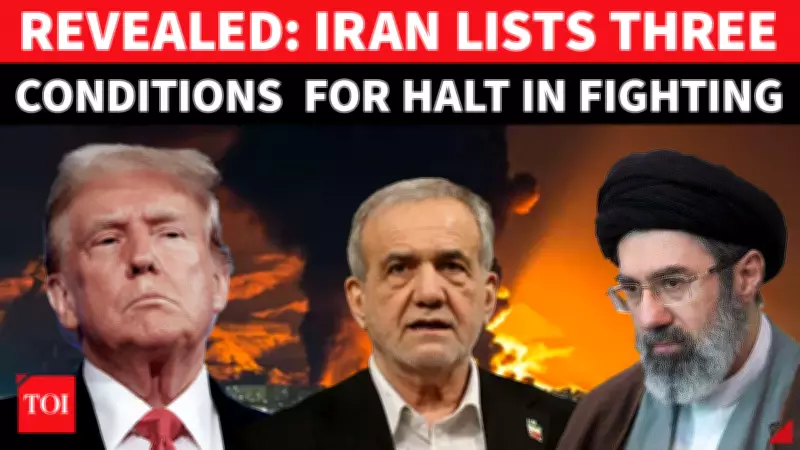
Iran Sets Clear Terms for Conflict Resolution Amid Escalating Tensions
As the military confrontation between Iran and the Israel-United States alliance enters its thirteenth consecutive day, Iranian President Masoud Pezeshkian has publicly articulated the most definitive roadmap yet for potentially ending the hostilities. In a significant diplomatic statement released on social media platform X, following high-level consultations with Russian and Pakistani leadership, Pezeshkian delineated three non-negotiable prerequisites for Tehran to consider de-escalation and ceasefire negotiations.
The Three Core Demands from Tehran
The Iranian administration's conditions for halting military operations are multifaceted and directly address the root causes and consequences of the ongoing conflict.
- Formal Recognition of Iran's Legitimate Rights: The foremost demand involves the international community, particularly the United States and Israel, acknowledging and respecting Iran's sovereign rights within the regional geopolitical framework. This includes its security interests and economic entitlements under various international agreements.
- Comprehensive War Reparations: Iran insists on receiving substantial financial compensation for the extensive physical infrastructure damage, economic losses, and humanitarian costs incurred during the thirteen days of intense warfare. The reparations are framed as essential for national reconstruction and recovery.
- Binding International Security Guarantees: Perhaps the most critical condition, Tehran demands ironclad, enforceable guarantees from global powers and international bodies that future military aggression or hostile actions against Iranian territory and interests will be prevented through robust diplomatic and security mechanisms.
Intensified Diplomatic Maneuvering Behind the Scenes
This explicit articulation of terms coincides with a flurry of diplomatic activity aimed at containing the conflict's expansion. Russia, maintaining its role as a key strategic partner to Iran, has been actively mediating at the highest levels. Reports confirm that Russian President Vladimir Putin recently engaged in a substantive telephone discussion with United States President Donald Trump, exploring viable proposals for a swift diplomatic resolution to the escalating crisis.

The international community watches with heightened concern as these conditions are presented. Analysts suggest that while the demands are stringent, they provide a concrete basis for negotiation that was previously lacking, moving the discourse from abstract calls for peace to specific, actionable items on the negotiation table.
Regional Stability Hangs in the Balance
The conflict, now in its second week, has already resulted in significant regional destabilization, with incidents reported from the Strait of Hormuz to Iraqi Kurdistan. Iran's statement represents a pivotal moment, offering a potential off-ramp from further military escalation. However, the acceptability of these conditions to Israel and the United States remains uncertain, setting the stage for a complex diplomatic chess match in the coming days.
The global response to Iran's outlined conditions will likely determine whether the region moves toward a negotiated settlement or plunges deeper into a protracted and devastating conflict with far-reaching international consequences.