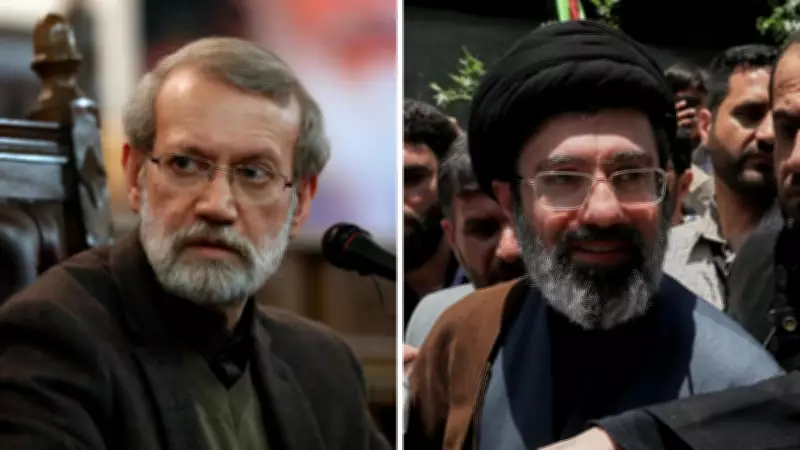
Iran's Supreme Leader Issues Stern Warning Over Security Chief's Assassination
In a strongly worded statement, Iran's Supreme Leader Mojtaba Khamenei declared on Wednesday that the perpetrators responsible for the killing of the country's top security official, Ali Larijani, will face imminent retribution. This marks Khamenei's first public reaction following Larijani's death, delivered through a written message on his official Telegram channel during Larijani's funeral in Tehran.
Khamenei Condemns the Attack as an Act of Hatred
Mojtaba Khamenei emphasized, "Without a doubt, the assassination of such a figure attests to his importance and to the hatred that the enemies of Islam harbour toward him." He further asserted, "Every drop of spilled blood comes at a price, and the criminal murderers of these martyrs will soon have to pay it." This statement underscores the gravity with which Iran views the incident, labeling Larijani as a martyr for his contributions to national defence and regional policies.
Notably, Khamenei has maintained a low public profile since assuming office after the death of his father, former Supreme Leader Ali Khamenei, at the onset of the ongoing conflict. His absence from public appearances adds a layer of intrigue to this forceful declaration.

Details of the Fatal Strike and Its Aftermath
The attack occurred on Tuesday when Larijani was targeted at his daughter's residence in the Pardis area. According to the state-affiliated Fars News Agency, the strike resulted in multiple casualties, including:
- Ali Larijani, aged 68, a central figure in Iran's security apparatus
- His son
- A deputy official
- Several bodyguards
Fars News Agency described Larijani as "one of the country’s prominent and prudent officials," highlighting his significant role in shaping Iran's strategic policies. His death has been officially recognized as martyrdom, honoring his legacy in national security affairs.
Escalating Regional Tensions and Military Responses
This assassination unfolds against a backdrop of heightened hostilities involving Iran, Israel, and the United States. In retaliation, Iran launched missile and drone strikes targeting Israel and Gulf Arab neighbours. Concurrently, the United States conducted intensive airstrikes on Iranian missile sites located near the critical Strait of Hormuz.
These US operations focused on "hardened" facilities considered threats to international shipping, employing bombs weighing up to 5,000 pounds each. The Strait of Hormuz is a vital maritime chokepoint, through which approximately one-fifth of the world's oil supply transits. The current military actions have intensified tensions in the region, sparking global concerns over potential disruptions to energy supplies and broader geopolitical stability.
The situation remains fluid, with international observers closely monitoring developments as the conflict between these nations escalates further.