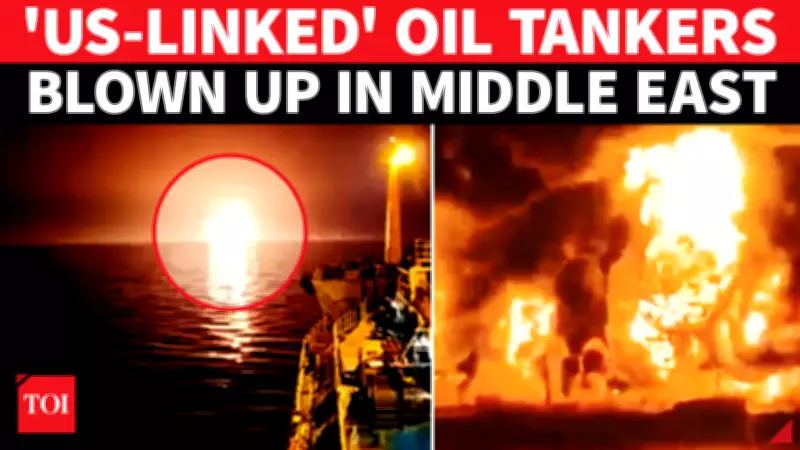
Major Escalation as Iranian Naval Drones Attack Oil Tankers Near Iraq
In a significant escalation of regional hostilities, Iran has claimed responsibility for a naval drone strike that destroyed two foreign oil tankers in the Persian Gulf near Iraq. The attack resulted in the death of one crew member and injuries to dozens of others, marking a dangerous turn in the ongoing conflict.
Details of the Attack and Casualties
The strike occurred in the strategic waters of the Persian Gulf, close to the Iraqi coastline. According to Iranian authorities, their naval drones successfully targeted and blew up the two tankers, which were reportedly linked to U.S. interests. The attack has heightened fears of a broader confrontation in one of the world's most vital maritime corridors.
Casualty reports confirm one fatality among the crew members, with numerous others sustaining injuries. Emergency response teams from nearby nations have been mobilized to assist the affected vessels and personnel, though the volatile security situation complicates rescue efforts.

Impact on Global Oil Supply and Regional Tensions
The Strait of Hormuz, a narrow passage through which nearly a fifth of the world's oil supply transits, is now at the center of this crisis. Iran has issued a stark warning, declaring that no oil will leave the Gulf while the war with the United States and Israel continues. This threat raises the specter of a major global energy shock, potentially disrupting markets and economies worldwide.
Analysts warn that any prolonged closure or instability in the Strait of Hormuz could lead to skyrocketing oil prices and supply shortages, affecting everything from transportation to industrial production globally.
Broader Context of the Iran War and International Reactions
This attack comes amid rising tensions in the region, with Iran engaging in a protracted conflict against U.S. and Israeli forces. The drone strike on the oil tankers is seen as a direct response to ongoing military operations and economic sanctions imposed by Western nations.
- Iran's military strategy has increasingly relied on asymmetric warfare, including drone and missile attacks, to counter superior conventional forces.
- International observers express deep concern over the potential for miscalculation leading to a full-scale war, which could draw in multiple regional and global powers.
- Diplomatic efforts to de-escalate the situation have so far yielded little progress, with both sides hardening their positions.
The United States and its allies are expected to issue strong condemnations and consider further measures in response to this latest provocation. Meanwhile, the global community watches anxiously, aware that the stability of the Middle East and the security of vital energy routes hang in the balance.