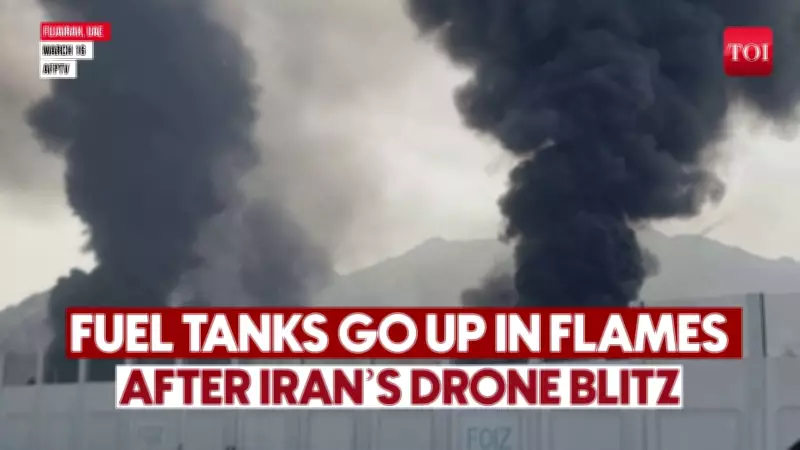
Satellite Images Confirm Iranian Drone Attack on UAE's Strategic Fujairah Oil Port
Satellite photographs circulating online have provided stark visual evidence of the destruction wrought by Iranian drone strikes targeting the Port of Fujairah in the United Arab Emirates on March 16, 2026. The images, which have been widely shared across digital platforms, depict a massive, dark plume of smoke billowing from the attack site, a signature of the intense fires ignited by the assault. This smoke column was reportedly visible even from orbital satellites, underscoring the scale and severity of the incident.
Strategic Significance of the Fujairah Port
The Port of Fujairah holds immense strategic importance for the UAE and global energy markets. It serves as the nation's sole major oil export terminal that operates independently of the Strait of Hormuz, a narrow maritime chokepoint through which approximately one-fifth of the world's oil supply typically flows. Iran has previously declared the Strait closed to vessels from the United States and its allied nations, making Fujairah a critical alternative route for the UAE to bypass potential Iranian blockades and maintain its crude oil exports.
The attack on this facility represents a direct strike against a vital economic and logistical asset of a key U.S. ally in the region. By targeting Fujairah, Iran has demonstrated its capability to threaten not only the Strait of Hormuz itself but also the alternative pathways that nations have developed to circumvent it.

Context and Regional Tensions
This drone strike occurs against a backdrop of heightened regional tensions and ongoing conflicts involving Iran and its proxies. The incident is part of a broader pattern of hostilities that have seen Iranian-backed groups launch attacks against various targets in the Middle East. The assault on Fujairah follows a series of similar drone and missile attacks reported in neighboring countries, including Saudi Arabia and Kuwait, as regional air defense systems remain on high alert.
The targeting of such a strategically sensitive location suggests a calculated escalation by Iran, potentially aimed at exerting pressure on the UAE and its allies by disrupting a key node in the global energy supply chain. The visible damage and smoke plumes captured from space serve as a powerful symbol of the tangible impacts of these geopolitical confrontations.
Implications for Global Energy Security
The attack on the Fujairah port raises immediate concerns about the stability of oil exports from the Persian Gulf region. Any significant disruption to operations at Fujairah could force a greater reliance on the Strait of Hormuz, which remains under the shadow of Iranian threats. This situation creates volatility in global energy markets and poses challenges for nations dependent on Gulf oil.
Furthermore, the use of drones in this attack highlights the evolving nature of asymmetric warfare in the region. Relatively inexpensive drone technology is being employed to inflict substantial economic and infrastructural damage on high-value targets, presenting a complex challenge for traditional defense systems.
The international community, particularly the United States and its allies, is closely monitoring the aftermath of this strike. The incident is likely to influence diplomatic and military strategies in the region, as stakeholders assess the need for enhanced protection of critical infrastructure and consider responses to such provocations.