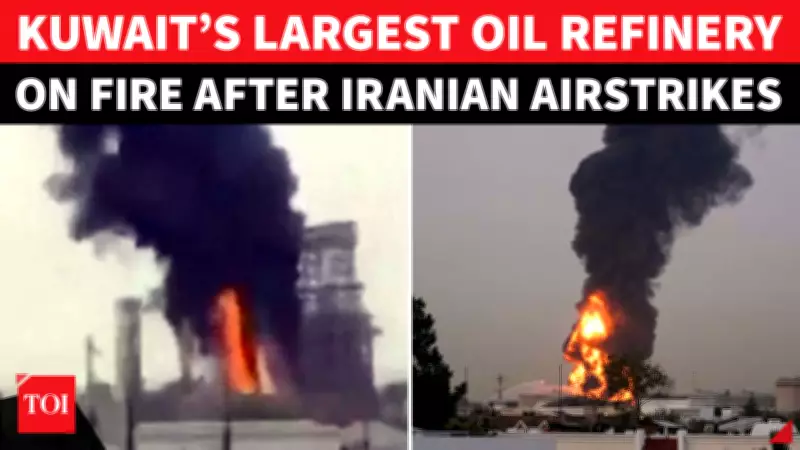
Iranian Drone Strike Incinerates Kuwait's Premier Oil Refinery in Massive Blaze
In a dramatic escalation of regional tensions, Iran launched a drone assault on Friday that targeted Kuwait's Mina Al-Ahmadi oil refinery, the nation's largest such facility. The attack resulted in a catastrophic fireball that engulfed multiple units, forcing authorities to implement an emergency shutdown as a precautionary measure.
Refinery Operations Halted Amid Intense Firefighting Efforts
The Mina Al-Ahmadi refinery, a critical component of Kuwait's energy infrastructure with a daily processing capacity of 730,000 barrels of oil, sustained significant damage. Firefighters battled the inferno for several hours before managing to extinguish the blaze. Fortunately, no casualties were immediately reported from the incident, according to preliminary statements from Kuwaiti officials.
Authorities confirmed that the affected refinery units were completely shut down following the attack. This disruption is expected to have substantial implications for Kuwait's oil production and export capabilities, given the facility's pivotal role in the nation's energy sector.

Wider Pattern of Attacks Across Gulf Region
This assault on Kuwait's refinery is not an isolated incident but rather part of a coordinated series of attacks affecting multiple Gulf Cooperation Council (GCC) states. In recent developments, other nations including:
- Saudi Arabia
- United Arab Emirates
- Bahrain
- Qatar
have also reported similar attacks targeting their energy facilities and critical infrastructure. These strikes appear to represent a significant escalation in regional hostilities, with energy infrastructure becoming a primary target in what analysts describe as a widening conflict.
Regional Security Implications and Response
The targeting of such a high-capacity refinery underscores the vulnerability of energy infrastructure in the Gulf region to asymmetric warfare tactics, particularly drone attacks. Security experts note that these incidents highlight growing tensions between Iran and Gulf states, with energy facilities becoming strategic targets in regional power struggles.
As firefighting operations concluded at the Mina Al-Ahmadi site, Kuwaiti authorities began assessing the full extent of the damage and planning for restoration of operations. The broader implications for global oil markets and regional stability remain under close observation by international observers and energy analysts worldwide.