

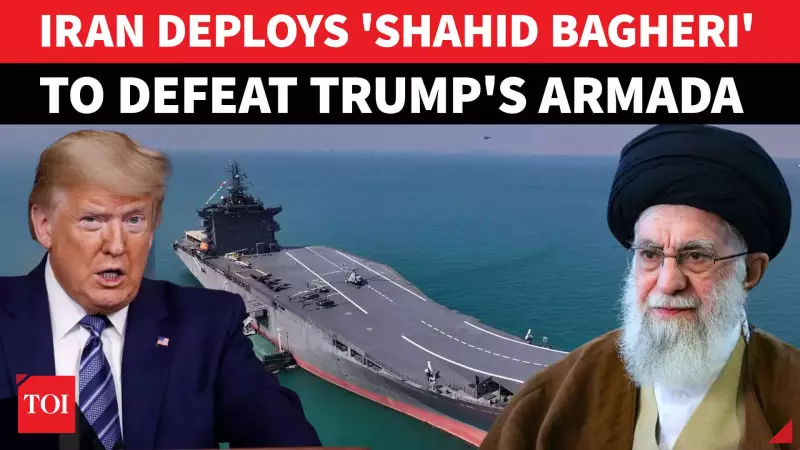
Iran Deploys First Naval Drone Carrier Amid US Military Buildup in Persian Gulf
A significant military escalation is unfolding in the Persian Gulf region as Iran has deployed its inaugural dedicated naval drone carrier, the IRIS Shahid Bagheri, near the strategically vital Strait of Hormuz. This development coincides with the confirmation from U.S. President Donald Trump regarding the deployment of the aircraft carrier USS Abraham Lincoln and an expanding American naval armada toward West Asia, setting the stage for a potential confrontation.
Iranian Drone Capabilities and Strategic Posturing
According to Iranian state media, the drones stationed aboard the Bagheri are fully operational and prepared to respond decisively to any hostile actions. Intelligence reports further indicate that Iran has reinforced its southern coastline with elite units from the Islamic Revolutionary Guard Corps (IRGC), enhancing its defensive and offensive capabilities in the area. The deployment underscores Iran's commitment to asymmetric warfare strategies, leveraging swarm-drone tactics that could challenge even advanced naval defense systems.
US Concerns and Military Analysis
Military analysts highlight that Washington's apprehension stems not from the size of the Iranian vessel but from the potential effectiveness of Iran's asymmetric swarm-drone strategy. This approach involves deploying large numbers of drones simultaneously, which could overwhelm sophisticated U.S. naval defenses and create significant operational challenges. The presence of the Bagheri near the Strait of Hormuz, a critical chokepoint for global oil shipments, amplifies the strategic stakes involved.

Escalating Tensions and Diplomatic Warnings
Senior Iranian commanders have issued stark warnings against what they term U.S. "adventurism" in the region, reflecting Tehran's resolve to counter American military pressure. These statements, coupled with the concurrent naval deployments, have pushed tensions between Iran and the United States closer to a dangerous tipping point. The situation is further complicated by broader geopolitical dynamics, including regional alliances and ongoing conflicts, which could influence the trajectory of this standoff.
Broader Implications for Regional Stability
The deployment of the IRIS Shahid Bagheri and the U.S. naval buildup signal a hardening of positions on both sides, with potential ramifications for regional stability and global energy security. As both nations bolster their military presence in the Persian Gulf, the risk of miscalculation or accidental clashes increases, necessitating careful diplomatic engagement to prevent escalation. Observers are closely monitoring developments, as any conflict in this volatile region could have far-reaching consequences for international relations and economic stability.






