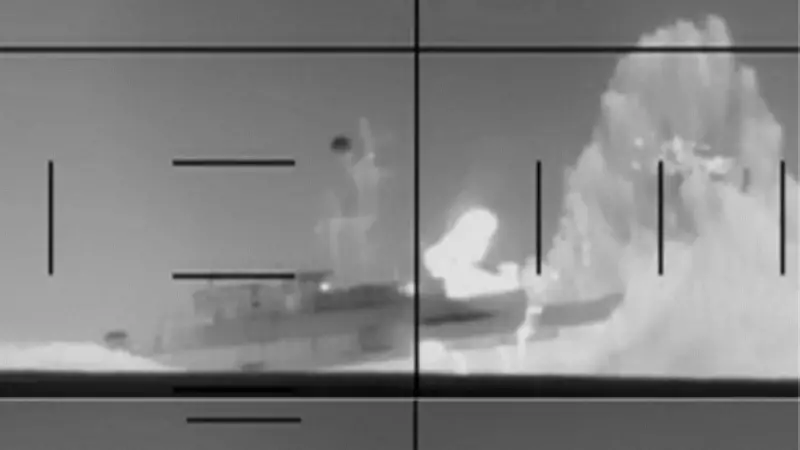
Iran Condemns US After Submarine Sinks Iranian Warship in Indian Ocean
Iran has issued a sharp condemnation of the United States following the sinking of an Iranian naval vessel by an American submarine in the Indian Ocean. Iranian officials labeled the attack an "atrocity" and issued a stern warning to Washington, stating it would "bitterly regret" the precedent established by this military action.
Diplomatic Fury Over Naval Strike
Iranian Foreign Minister Abbas Araghchi publicly denounced the strike, emphasizing that it occurred far from Iran's territorial waters. He specifically condemned the targeting of the frigate Dena, which had recently participated in joint activities with the Indian Navy.
"The US has perpetrated an atrocity at sea, 2,000 miles away from Iran's shores. Frigate Dena, a guest of India's Navy carrying almost 130 sailors, was struck in international waters without warning," Araghchi declared in a post on social media platform X. "Mark my words: The US will come to bitterly regret the precedent it has set," he added with forceful rhetoric.

Details of the Lethal Attack
The US Navy sank the Iranian warship as it was returning from participation in the Milan naval exercise, a multilateral wargame hosted by India. The attack in the Indian Ocean reportedly resulted in the deaths of at least 80 sailors, marking a significant escalation in regional tensions.
This strike occurred amid an intense wave of US and Israeli operations targeting Iranian assets. The pace of attacks became so severe on Wednesday that Iranian state television announced the postponement of a planned mourning ceremony for Supreme Leader Ayatollah Ali Khamenei, who was killed at the onset of the broader conflict. This postponement highlights the disruption caused by the military engagements, recalling the massive funeral attendance for his predecessor, Ayatollah Ruhollah Khomeini, in 1989.
Regional Conflict Escalation and Global Impact
US President Donald Trump praised the American military's performance in the conflict, remarking that it was "doing very well on the war front, to put it mildly." Meanwhile, the conflict has continued to spread across the Middle East region with alarming speed.
Iran launched retaliatory attacks toward Bahrain, Kuwait, and Israel, while Turkey reported that NATO air defenses successfully intercepted a ballistic missile fired from Iran before it could enter Turkish airspace. These developments indicate a rapidly expanding theater of military operations.
The fighting has already resulted in heavy casualties and widespread disruption throughout the region. According to official reports, the war has killed more than 1,000 people in Iran, over 70 in Lebanon, and approximately a dozen in Israel. Beyond the human toll, the conflict has severely disrupted global oil and gas supplies, hampered critical international shipping routes, and left hundreds of thousands of travelers stranded across the Middle East.
Broader Implications and International Response
The sinking of the Iranian frigate Dena represents a significant escalation in the ongoing tensions between Iran and the United States. The vessel's recent participation in exercises with the Indian Navy adds a diplomatic dimension to the military action, potentially affecting international relations in the region.
As the conflict continues to evolve, the international community watches closely, concerned about further escalation and the broader implications for global stability. The warning from Iran's foreign minister suggests that Tehran may be planning further responses to what it perceives as an unjustified attack on its naval forces in international waters.