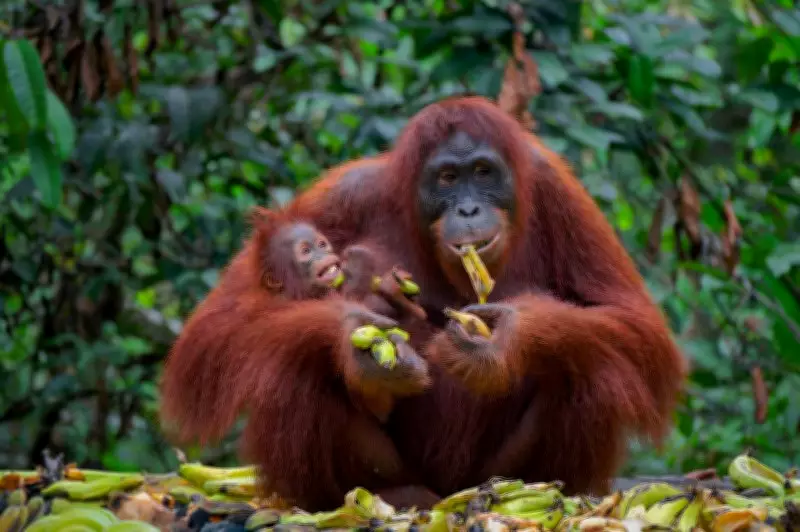
A new report has revealed that deadly floods and landslides in Indonesia's Sumatra island last year wiped out at least 7% of the total population of the critically endangered Tapanuli orangutan. The cyclone-induced disaster killed at least 1,200 people and damaged around 300,000 homes, with environmental groups attributing the severity of the damage to rapid deforestation on the island.
Impact on Orangutan Population
According to the report, at least 58 Tapanuli orangutans, which are endemic to the area around north Sumatra's Batang Toru forest, were killed in the floods. This figure is based on a survey of the western block of the forest, which is home to a majority of the total population of 800 primates. The report noted that other parts of the forest were not surveyed, meaning the actual death toll could be higher.
Climate Change and Habitat Risk
The study, a joint effort by Brunei-based Borneo Futures, World Weather Attribution, and Liverpool John Moores University, used satellite images to assess damage to the West Block of Batang Toru and historical records of the orangutan population. It concluded that human-induced climate change has likely increased the intensity and frequency of extreme rainfall around the Malacca Strait, putting the Tapanuli orangutan's habitat at greater risk.

Erik Meijaard from Borneo Futures, lead author of the study, explained that heavy rain saturated the soil, causing large sections of hillsides in primary forests to collapse in fast-moving landslides. He stated, "If you get caught as an orangutan... if anything comes down at great speeds, survival chances are going to be very minimal, so it became a real concern." He emphasized that this level of loss is substantial for a species with such a small total population, and when combined with ongoing pressures like habitat degradation and human-wildlife conflict, it further underscores the urgency of implementing and adequately resourcing a coordinated species action plan.
Call for Action
Another researcher, Panut Hadisiswoyo, urged the Indonesian government to collaborate with NGOs and researchers to prevent further decline of the orangutan population. He said, "We can minimise the poaching or hunting and then the number probably can be stabilised," adding that all parties must pay attention to poor land use, which also contributes to the declining population.