

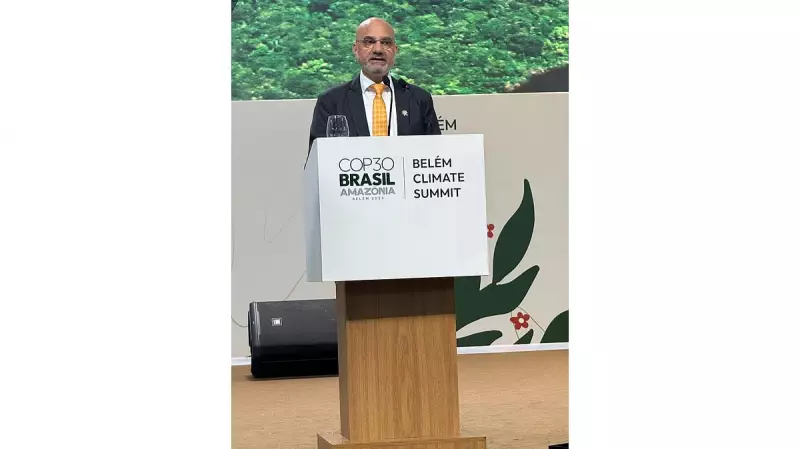
India has taken a significant step in global climate diplomacy by joining the Brazil-led forest conservation fund as an observer during the COP30 climate summit in Belem. The move comes as the world marks ten years since the landmark Paris Agreement, with India calling for enhanced global ambition in tackling climate change.
India's Strategic Position at COP30
Ambassador Dinesh Bhatia delivered India's national statement at the COP30 Leaders' Summit on November 7, 2025, representing Prime Minister Narendra Modi. The Indian delegation emphasized that COP30 presents a crucial opportunity to evaluate the global response to climate change challenges while celebrating the enduring legacy of the Rio Summit.
The Rio Summit principles, particularly those of equity and common but differentiated responsibilities and respective capabilities, formed the cornerstone of India's position at the climate talks. These principles acknowledge that while all nations share responsibility for addressing climate change, developed countries should bear greater responsibility given their historical emissions and capabilities.

Reflecting on a Decade of Climate Action
As the world observes the tenth anniversary of the Paris Agreement, India has stressed the need for stronger implementation of climate commitments by developed nations. The country's participation as an observer in the Brazil-led forest fund demonstrates its commitment to collaborative solutions while maintaining its developmental priorities.
The forest conservation initiative, spearheaded by host nation Brazil, aims to protect vital rainforest ecosystems that serve as carbon sinks and biodiversity hotspots. India's observer status allows it to contribute to discussions while monitoring the fund's operations and impact.
Looking Forward: Equity and Implementation
India's stance at COP30 reinforces its long-standing position that climate action must be equitable and account for different national circumstances. The country has consistently advocated for climate justice, emphasizing that the burden of adjustment should not fall disproportionately on developing nations still addressing poverty and development challenges.
The climate summit in Belem has become a platform for assessing progress since the Paris Agreement and setting more ambitious targets for the coming decade. India's active participation and strategic positioning in forest conservation efforts signal its growing influence in shaping global environmental governance.
As climate impacts intensify worldwide, India's call for renewed commitment and stronger implementation mechanisms at COP30 highlights the urgency of collective action. The country's balanced approach—participating in international initiatives while safeguarding its development space—offers a model for emerging economies in global climate negotiations.






