A new study by the Indian Institute of Technology (IIT) Madras has warned that climate change, weak public services, and years of uneven development have pushed migration from Uttarakhand's hill districts beyond temporary work movements into permanent family relocations. This has left behind locked homes, abandoned farms, and a growing number of ghost villages.
Study Details
The study, titled "From Pahad to Maidan: Climate Change and Socio-Economic Dynamics of Out-Migration in the Uttarakhand Himalayas," was published in Frontiers in Human Dynamics. It was authored by research scholar Aayush Shah Thulgharia and professor Krishna Malakar. The researchers used census data, migration commission reports, and field interviews in villages across Almora and Nainital districts to examine why hill residents were leaving. They found that the reasons were no longer limited to jobs but also included failing agriculture, water stress, poor healthcare, inadequate education, and weak local infrastructure.
Widening Divide
Shah, a Nainital native pursuing his PhD at IIT Madras, told TOI that the study showed a widening divide between Uttarakhand's hill districts and its plains. "The hill districts are resource-rich, but development has remained concentrated in the plains. Roads, healthcare, education, employment, and basic services have not reached mountain communities at the pace required to hold people back," he said.

Climate Change Impact
Researchers said climate change had intensified the older problem of distress migration. Erratic rainfall, declining water availability, frequent climate-related hazards, and falling agricultural productivity have made subsistence farming, once the backbone of the hill economy, increasingly uncertain. Families dependent on small farms, livestock, and local resources are therefore moving out in search of education, medical care, and stable income in towns and plains.
Forced Decisions
Shah said the field interviews showed that migration was often a forced decision rather than a voluntary move. "People spoke about shrinking farm yields, drying water sources, and lack of income opportunities. When farming becomes unreliable and basic services remain weak, migration becomes the only practical option for many families," he said.
Demographic Impact
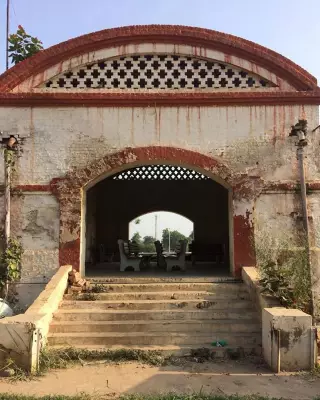
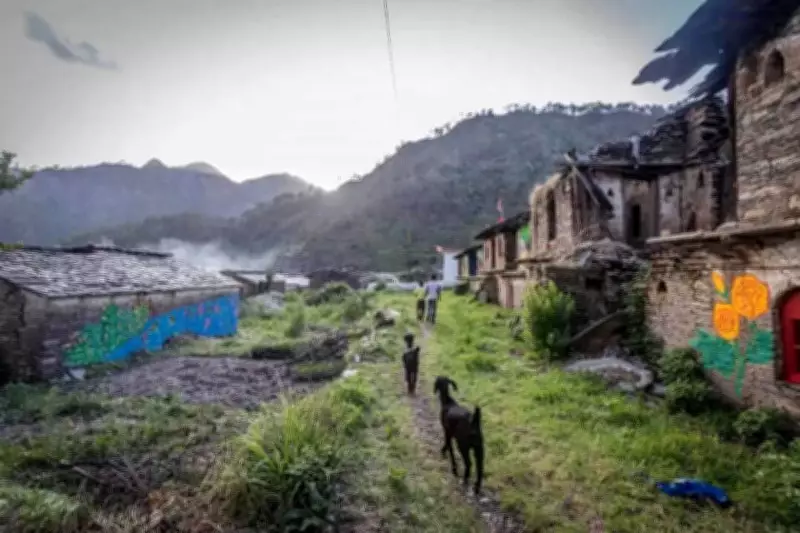
The demographic impact has become visible across several hill districts where young people and working-age residents have left in large numbers, leaving aging populations behind. Locked houses, uncultivated terraced fields, and thinning village populations are no longer isolated signs of decline but part of a wider shift that threatens the cultural and economic fabric of Uttarakhand's Himalayan communities.
Migration Figures
State migration commission figures have earlier underlined the scale of the crisis. Between 2011 and 2022, over 6.9 lakh people migrated temporarily from Uttarakhand villages, while nearly 1.4 lakh moved out permanently, with Almora, Tehri, and Pauri among the worst-affected districts. Since 2018, another 24 villages have become uninhabited, adding to the 734 villages that emptied between 2011 and 2018.
Unsustainable Trend
Malakar said the trend was unsustainable for both the hills and the plains. "This migration is not only a mountain problem. When villages empty out and urban centres absorb people without enough jobs, housing, and services, the stress shifts from one geography to another," she said.
Policy Recommendations
The study called for urgent policy intervention focused on climate-resilient agriculture, better roads, reliable healthcare, stronger schools, and local employment suited to mountain conditions. It said reverse migration would remain limited unless returning families found viable livelihoods in villages through horticulture, animal husbandry, ecotourism, local food processing, small enterprises, and better access to markets.
Risk of Loss
Researchers warned that without targeted action, Uttarakhand risked losing not only population from its hills but also traditional knowledge, community networks, and old mountain livelihoods. "If policy does not respond now, the state risks losing not just population from the hills but also centuries-old village systems, cultural practices, and mountain livelihoods," Shah said.