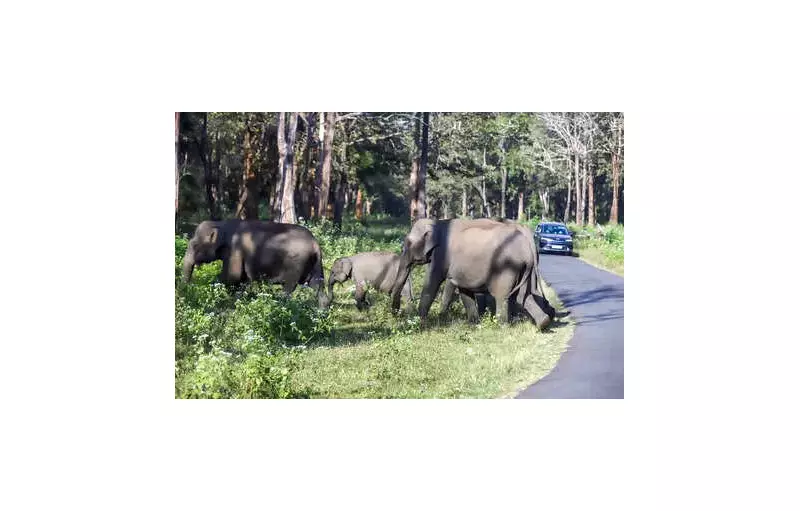
A groundbreaking study by the Wildlife Institute of India (WII) has revealed a disturbing escalation in confrontations between humans and elephants in Jharkhand. What were once sporadic incidents at the turn of the century have now evolved into a persistent and growing threat, primarily due to human encroachment on natural elephant habitats.
From Sporadic Incidents to a Persistent Menace
The research, published in the international journal Ecology and Evolution on December 18, analyzed data spanning from 2000 to 2023. It attributes the sharp rise in conflicts to three major factors: habitat fragmentation, agricultural expansion, and increased human activity within traditional elephant corridors. The study was a collaborative effort by eight wildlife experts, including Kalpana Roy, Ramesh Kumar Pandey, Athira N. Ganesan, Ananya Dutta, Dheeraj Mittal, Parag Nigam, Anukul Nath, and team leader Bilal Habib.
Bilal Habib informed that the comprehensive study took one year to complete. "We have so far finished state-specific studies for Assam, Chhattisgarh, and Jharkhand," he stated, emphasizing that each region faces unique drivers behind the conflicts.

Jharkhand's Conflict Hotspots: Ranchi, East Singhbhum, Khunti
For Jharkhand, the research team gathered data from 22 forest divisions, documenting a staggering 1,740 conflict incidents. These resulted in 1,340 human fatalities and 400 injuries. The analysis pinpointed three districts as the epicenters of this crisis: Ranchi, East Singhbhum, and Khunti.
"This means, in Jharkhand, of the 24 districts, Ranchi, East Singhbhum and Khunti divisions are the key areas for human-elephant conflicts," explained Bilal Habib. He stressed that targeted intervention in these zones could reduce over 80% of the conflicts, offering a clear roadmap for government planners.
All identified conflict hotspots are located near protected areas and fragmented forests. The study notes that villages with high conflict levels typically have more cropland and built-up areas. Landscape fragmentation and habitat degradation are primary catalysts, with proximity to forests, water sources, roads, and elephant reserves also influencing risk levels.
Root Causes and Monsoon Mayhem
Jharkhand, home to an estimated 679 elephants according to the 2017 census, serves as a natural habitat and crucial migratory corridor connecting forests in West Bengal, Odisha, and Chhattisgarh. However, this corridor is under severe strain.
Extensive coal mining in districts like Dhanbad, Hazaribag, and West Singhbhum has caused significant habitat fragmentation. Critical pathways like the Saranda Forest—a vital migration route—have been degraded, disrupting elephant movement and forcing the animals into human settlements. This displacement has led to a surge in crop-raiding, property damage, and tragic human deaths, placing a heavy burden on local communities.
The study also identified a seasonal pattern, with the monsoon period witnessing heightened conflict. Denser foliage and reduced visibility during these months make it harder for people to spot elephants, leading to more frequent and unexpected encounters.
Call for Strategic Policy and Management
The WII experts conclude with urgent recommendations for policy and management, focusing on high-conflict zones. Key solutions include:
- Restoring and maintaining habitat connectivity to ensure safe elephant passage.
- Regulating land-use changes near critical conflict areas.
- Minimizing disturbances caused by roads and development projects.
- Implementing effective mitigation structures like solar fencing and trenches.
The findings underscore that strategic, science-backed interventions are crucial to safeguarding both Jharkhand's communities and its elephant population for the future.