Haryana Thermal Power Plants Flout Water Reuse Mandate, RTI Reveals
In a state grappling with plummeting groundwater levels and chronic drinking water shortages, a Right to Information inquiry has uncovered that Haryana's major thermal power plants persistently operate using freshwater, completely disregarding the policy requirement to utilize treated sewage water. This revelation emerges as Haryana contends with an annual water deficit approaching 14 billion cubic meters, where every significant industrial consumption intensifies pressure on already overburdened water resources.
Policy Mandate Versus Ground Reality
The RTI responses indicate that across crucial thermal facilities, the compulsory transition to treated wastewater has either not been implemented or is inadequately documented. According to the Central government's tariff policy established in 2016, thermal power plants situated within 50 kilometers of a sewage treatment plant are obligated to employ treated wastewater for all non-potable applications. Haryana reinforced this objective through its 2019 wastewater reuse policy, explicitly directing industries to abandon freshwater usage wherever feasible.
Despite groundwater levels continuously declining, the majority of plants have failed to adopt treated water sources. The RTI application, submitted on February 19 by New Delhi-based activist Varun Gulati, requested plant-specific details from Haryana Power Generation Corporation Ltd regarding treated sewage water utilization, associated infrastructure, and contractual agreements. However, the replies consistently stated "no data available" or simply "NIL."

Specific Plant Findings and Freshwater Consumption
At the Panipat thermal power station, divisions CMDP-I, CMDP-II, and CMD(C) indicated that information concerning sewage water use "may be considered NIL." The Rajiv Gandhi plant in Hisar disclosed no records of treated sewage water consumption. Similarly, the planning division of the Deenbandhu Chhotu Ram thermal power plant in Yamunanagar marked its response as "NIL."
A consolidated reply issued by HPGCL on March 24 compiled inputs from six offices into a 14-page document. Even within this comprehensive compilation, key operational and planning divisions reported no available data on wastewater reuse.
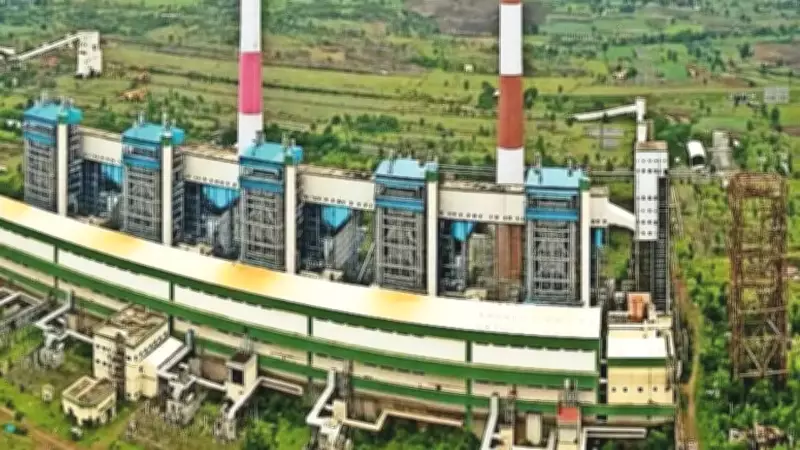
What became evident was the substantial scale of freshwater consumption. The Panipat plant utilizes approximately 90-100 million liters daily, Yamunanagar around 70-80 MLD, Hisar roughly 40-50 MLD, and the Jhajjar plant about 100-120 MLD. Collectively, these facilities consume several hundred million liters of freshwater every single day, with no documented shift toward treated sewage water.
Broader Implications and Official Responses
This data is particularly alarming in a state already struggling to fulfill its water demands. While agriculture remains the largest consumer of freshwater, thermal plants expend enormous quantities for cooling and ash handling—precisely the type of non-potable applications that the policy aimed to redirect to treated wastewater to safeguard drinking water and irrigation supplies.
A Haryana State Pollution Control Board official emphasized that thermal plants must minimize freshwater intake and employ treated sewage water wherever sewage treatment plants are accessible. These conditions, the official noted, constitute part of environmental safeguards designed to alleviate stress on groundwater and surface water sources.
Activist Varun Gulati asserted that the replies indicate a profound failure of accountability. "Either Haryana's thermal power plants are violating a binding national mandate, or the utility lacks any mechanism to monitor water usage. Both scenarios are unacceptable in a water-stressed state," he declared.
Existing Models and Systemic Challenges
The official highlighted that proven models already operate successfully elsewhere. One prominent example is Maharashtra, where the Nagpur Municipal Corporation and MAHAGENCO have for years supplied 150 MLD of tertiary-treated sewage water from the Bhandewadi STP to the Koradi and Khaperkheda thermal plants under long-term agreements.

Fawzia Tarannum, co-founder and strategic lead at GuruJal, commented that Haryana's complete absence of treated wastewater usage reflects a deeper systemic failure. She explained that the transition has been impeded by deficient conveyance infrastructure, pricing complications, poor institutional coordination, and concerns regarding water quality consistency.
"However, in a water-stressed state, continued reliance on freshwater represents a strategic risk to both energy and water security," she cautioned.