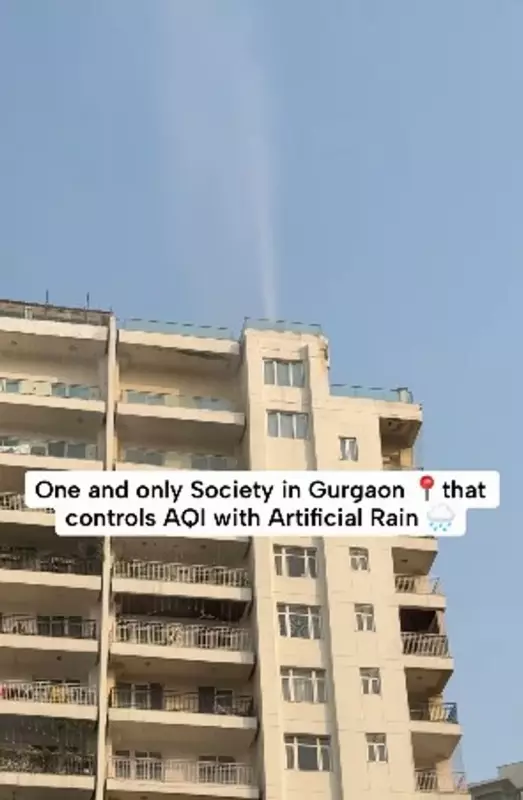
A residential society in Gurgaon has become an unexpected internet sensation after a video showcasing its unique method to combat the intense summer heat went viral. The footage, which has amassed millions of views, shows a network of sprinklers installed on the rooftops of several towers, creating a dramatic downpour effect within the society's premises.
An Innovative Response to Soaring Temperatures
The society, identified as Maple Heights in Sector 70, Gurgaon, implemented this system as a direct countermeasure against the punishing heatwave conditions. The visual is striking: water jets arch over the buildings, mimicking a natural rain shower and cooling the immediate ambient air. A resident of the society, Ankit Gupta, shared the now-famous clip on social media platform X (formerly Twitter) on May 21, 2024. His post, asking users to vote on whether the idea was "smart or silly," ignited a fierce online debate.
The core idea behind the installation is straightforward. By activating these rooftop sprinklers, the society aims to lower the local temperature through evaporation. As the water droplets fall and settle on surfaces, their subsequent evaporation absorbs heat from the surroundings, providing a temporary respite from the scorching weather for residents using common areas.

The Great Debate: Brilliant Hack or Water Wastage?
The viral video has split public opinion right down the middle, turning the Gurgaon society into a case study for urban heat management strategies.
Proponents of the system argue that it is a clever, low-tech innovation. They highlight the immediate relief it provides in a region where temperatures frequently breach 45 degrees Celsius. Supporters see it as a community-driven adaptation to climate change, improving livability during peak summer months. Some comments even praised the society's Resident Welfare Association (RWA) for taking proactive, tangible action where larger governmental solutions might be slow.
However, a significant chorus of critics has raised serious concerns, primarily focusing on water conservation. With many parts of India facing water scarcity, the spectacle of sprinklers running on building tops is seen by many as profoundly irresponsible. Detractors label it a "short-sighted" and "wasteful" gimmick that ignores the critical issue of sustainable resource management. The debate forces a difficult question: does the benefit of localized cooling justify the potential water cost?
How the System Operates
Reports indicate that the society is not using potable drinking water for this cooling project. Instead, the sprinklers are connected to the society's treated sewage water line. This water, also known as recycled or greywater, is typically used for landscaping and flushing purposes. By utilizing this non-potable source, the society attempts to address the water wastage critique. The system is reportedly used for limited durations, around 15-20 minutes, twice a day—once in the morning and once in the evening—to maximize the cooling effect during the hottest parts of the day.
Broader Implications and the Search for Balance
The Maple Heights experiment highlights a growing urban dilemma: how to adapt to increasing heatwaves in a sustainable manner. While the use of treated water mitigates some concerns, experts suggest that the long-term efficiency and impact of such methods need careful study. The discussion has expanded beyond this single society, prompting netizens to share other examples of similar installations in the National Capital Region (NCR).
The incident underscores the urgent need for innovative, yet resource-sensitive, cooling solutions in Indian cities. It serves as a real-world example of the trade-offs communities face between immediate comfort and long-term environmental responsibility. Whether this Gurgaon society's approach will inspire others or remain a controversial one-off likely depends on evolving perspectives on urban water management and climate resilience.

Ultimately, the viral video from Gurgaon has done more than just provide a curious spectacle. It has successfully sparked a crucial national conversation on heat mitigation, water use, and community-led innovation in the face of a warming planet.