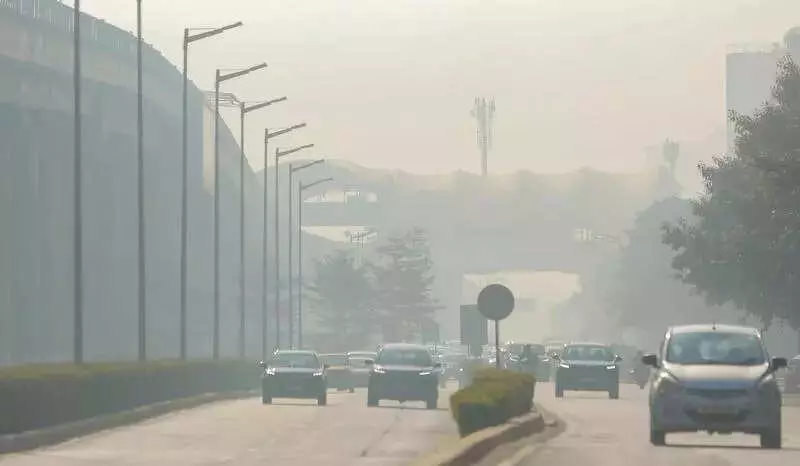
Gurgaon's Air Quality Plummets Again After Short-Lived Relief
Gurgaon residents experienced a fleeting breath of fresh air on Sunday, only to face deteriorating pollution levels once again on Monday. The city's air quality, which had briefly improved to the moderate category, worsened significantly as meteorological conditions turned unfavorable.
Sharp Decline in Wind Speed Triggers Pollution Build-Up
According to data from the Central Pollution Control Board (CPCB), Gurgaon's Air Quality Index (AQI) climbed to 276 on Monday morning, pushing the city back into the poor category. This marked a stark reversal from Sunday, when the AQI stood at 198 – representing the city's first moderate reading in over three weeks.
Meteorological data revealed a dramatic drop in surface wind speed, which fell from approximately 12 kilometers per hour on Sunday to just 3 kilometers per hour on Monday. This significant reduction in wind velocity severely weakened dispersion conditions, allowing emissions from various sources to accumulate near ground level.

Monitoring Stations Show Varied Pollution Levels
Pollution levels varied across different areas of the city:
- Sector 51 recorded an AQI of 337, falling into the very poor range
- Vikas Sadan logged 286, remaining in the poor category
- Gwalpahari, surrounded by relatively greener stretches, reported 173 and stayed in the moderate category
Only three of the city's four monitoring stations were operational on Monday, providing a partial but concerning picture of the pollution situation.
Officials Attribute Deterioration to Meteorological Factors
Pollution control officials emphasized that the worsening air quality was driven primarily by meteorological conditions rather than any sudden increase in emissions.
"Sunday's improvement was aided by higher wind speeds that helped disperse pollutants. With calm conditions returning on Monday, locally generated pollution got trapped close to the surface," explained an official from the state pollution control department.
Persistent Winter Pollution Patterns
January data underscores how persistent particulate pollution has been this winter. PM2.5 levels have remained in the very poor and severe ranges on most days this month, frequently crossing 300 and reaching multiple peaks above 350.
The brief dip on Sunday represented one of the few instances when pollution dropped below the poor category, highlighting how short-lived such improvements have been during this winter season.
Health Advisories and Future Outlook
Health advisories remain in effect, with residents urged to avoid prolonged outdoor exposure – particularly children, the elderly, and individuals with respiratory conditions.
Meteorologists indicate that air quality is likely to remain volatile unless stronger surface winds or another western disturbance improves dispersion conditions in the region.
According to CPCB guidelines, moderate AQI can cause breathing discomfort to people with asthma and lung or heart disease, while poor air quality can lead to breathing discomfort during prolonged exposure.