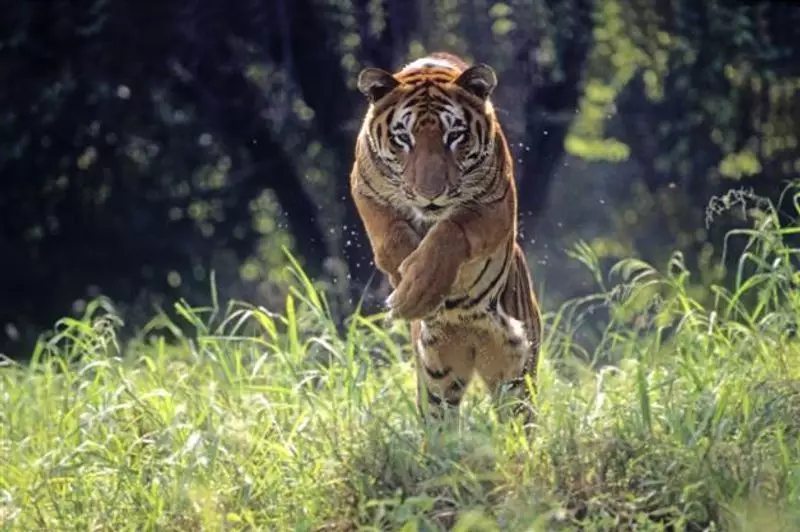
In a landmark event for wildlife conservation in India, the state of Gujarat has officially roared back onto the country's tiger map after an absence of more than three decades. The momentous confirmation came on Thursday, May 16, 2024, following the verified sighting of a majestic big cat in the Dang district.
A Historic Sighting After Decades
The breakthrough was achieved through a combination of traditional tracking and modern technology. Officials from the Gujarat forest department, acting on persistent reports and local intelligence, successfully captured photographic evidence of the tiger. This visual proof was crucial for the official record, ending a long wait for the state's wildlife enthusiasts and conservationists.
The last officially recorded tiger presence in Gujarat was in 1992. Since then, despite occasional anecdotal reports and hopes, no concrete evidence had emerged to reclaim the state's position on the national tiger landscape. This new sighting, therefore, marks a pivotal chapter in the region's natural history.

The Location and Official Confirmation
The tiger was recorded in the lush, deciduous forests of the Dang district, located in southern Gujarat. This area, sharing a border with the tiger-rich state of Maharashtra, has long been considered a potential corridor for the movement of these elusive predators.
The formal announcement was made by a senior official of the Gujarat forest department. "We can now authoritatively state that Gujarat is back on the tiger map of India," the official declared, underscoring the significance of the validated evidence. The department has initiated a detailed protocol to monitor the animal's movement and ensure its safety, while also alerting local communities.
Implications for Conservation and Future Efforts
This reappearance has electrified the conservation community and carries profound implications. Firstly, it validates the health and potential of Gujarat's forest ecosystems to support apex predators. The presence of a tiger indicates a thriving prey base and a robust habitat, which is a positive sign for overall biodiversity.
Secondly, it highlights the importance of forest corridors connecting different states. The tiger's presence in Dang likely signifies dispersal from neighboring Maharashtra, emphasizing the need for inter-state collaboration in habitat management and protection. Conservationists now foresee increased focus and possibly enhanced resources for protecting Gujarat's forests as potential tiger habitat.
However, the return also brings new challenges. The forest department must now ramp up efforts in:
- Intensive monitoring using camera traps and patrols to track the tiger's range.
- Community engagement to manage human-wildlife interaction and build local support for conservation.
- Habitat protection to secure the area from encroachment and other threats.
This single sighting opens a new frontier for tiger conservation in India, proving that with protected landscapes and ecological connectivity, the range of the national animal can expand. It serves as a powerful reminder of nature's resilience and a call to continue safeguarding India's natural heritage for future generations.