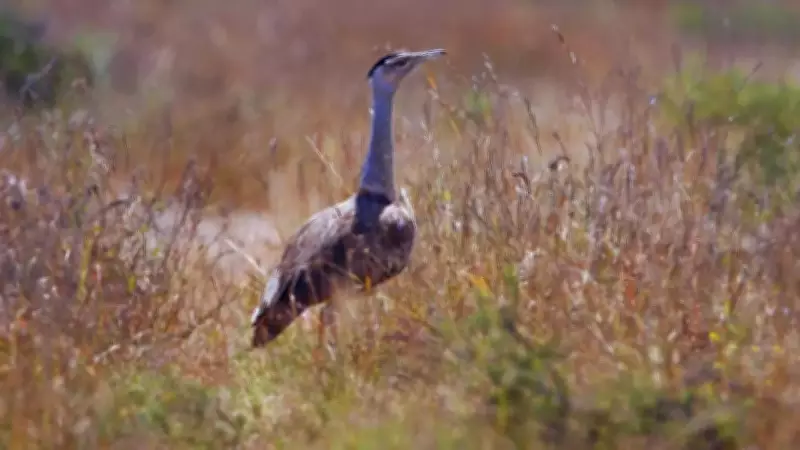
Great Indian Bustard Conservation Achieves Major Milestone with New Chicks in Rajasthan
India's dedicated efforts to save the critically endangered Great Indian Bustard have reached a significant milestone with the successful hatching of two new chicks at a conservation breeding facility in Rajasthan. This development marks a crucial step forward in the nation's ambitious conservation program aimed at protecting this iconic species from extinction.
Captive Population Reaches Record High
The arrival of these two chicks has elevated the total number of Great Indian Bustards under captive care to 70 individuals, representing the highest recorded population since the program's inception. This achievement demonstrates substantial progress in the breeding initiative designed to bolster the species' dwindling numbers.
Minister Announces Breakthrough on Social Media
Union Cabinet Minister for Environment, Forest & Climate Change Bhupender Yadav shared the news on social media platform X, stating: "Another milestone achieved in Project GIB! Project Great Indian Bustard entered into the fourth year of its captive breeding with two new chicks hatched at the Conservation Breeding Centre of Rajasthan this week, one from natural mating and the other from artificial insemination, taking the tally of birds in captivity to 70."

The minister described this moment as a significant advancement for Project Great Indian Bustard, which is now entering its fourth year of operation. This captive breeding program represents one of the most critical conservation initiatives for the species worldwide.
Diverse Breeding Methods Yield Success
According to the Ministry of Environment, Forest and Climate Change, the newly hatched chicks resulted from different breeding approaches. One chick emerged from natural mating between the birds, while the other was produced through artificial insemination techniques. This diversity in breeding methods enhances the genetic viability and resilience of the captive population.
Preparing for Wild Release
In a groundbreaking development for species conservation, some of this year's captive-bred chicks will undergo soft release into the wild later this year. This process involves returning birds to their natural habitat while ensuring they possess the necessary survival skills to thrive outside captivity.
Minister Yadav emphasized that this marks "a new challenging beginning for the project" that will help increase the wild population of Great Indian Bustards. The soft release strategy represents a critical transition from captive breeding to wild population restoration.
Scientific Management and Survival Rates
The conservation program employs scientifically guided methods that have demonstrated impressive results. Observations from similar breeding programs worldwide indicate that these approaches have contributed to a 20 to 30 percent increase in survival rates for captive-bred birds.
Recognition for Rajasthan Forest Department
Minister Yadav extended congratulations to the forest officials of the Rajasthan Forest Department for their instrumental role in achieving this conservation milestone. Their active involvement in implementing the breeding and conservation processes has been crucial to the program's success.
Broader Environmental Context
The conservation of the Great Indian Bustard forms part of India's comprehensive environmental agenda under Prime Minister Narendra Modi's leadership. Officials express confidence that the scientific management of this program will ensure the species' long-term survival and recovery.
Once widespread across India's grasslands, the Great Indian Bustard has become one of the world's most endangered bird species. This conservation breakthrough offers renewed hope for restoring the species to its former range and ecological significance.