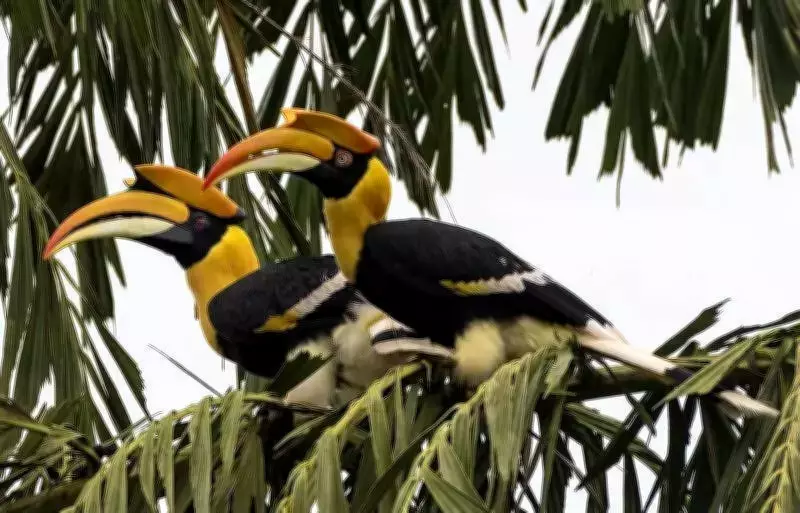
Great Hornbill Crowned Flagship Species for Ratnagiri District at State Bird Conference
In a significant move for avian conservation, the Maharashtra state forest department officially declared the Great hornbill as the ‘flagship species for Ratnagiri district’ during a two-day statewide bird conference held in Ratnagiri on February 22 and 23. This designation underscores the bird's ecological importance and aims to bolster protection efforts in the region.
Hornbills: The ‘Farmers of the Forest’ Facing Climate Challenges
The conference shed light on the critical role of hornbills, with presentations revealing that nine hornbill species are found in India, four of which inhabit the Western Ghats, particularly in Ratnagiri district. Pratik More of the Sahyadri Sankalp Society and a member of the IUCN SSS Hornbill Specialist Group, in a talk titled ‘Farmers of Forest’, emphasized that these birds act as natural cultivators. “Hornbill birds cultivate the forest for many years. Their excreta aids in seed dispersal across nearly 12 square kilometers,” he stated. However, he warned that extended monsoons and climate change have disrupted their breeding cycles, making habitat conservation a pressing responsibility.
Conference Highlights and Expert Insights on Bird Conservation
The event featured diverse sessions, including discussions on coastal and migratory avifauna, natural habitats, and avian diversity, complemented by activities like a bird trail, a philately exhibition of wildlife stamps, and a folk play advocating vulture conservation. It drew an enthusiastic response from bird enthusiasts across Maharashtra.

Former principal chief conservator of forests Sunil Limaye stressed the interconnectedness of forests and birds: “To save forest cover, we must prevent tree felling. Birds are natural seed dispersers, and only forests can safeguard their habitats.” He called for collective action, noting that areas like grasslands, sacred groves, and wetlands—often not officially classified as forests—need identification and protection through community efforts.
Officials Emphasize Cooperation and Tourism Potential
Kolhapur's chief conservator of forests, G Guruprasad, highlighted the need for widespread cooperation in protecting birds and animals. STR field director Tushar Chavan pointed out that India hosts 1,300 bird species, with about 500 in Maharashtra, including 220 migratory ones. He affirmed the conference's role in promoting habitat conservation, stating, “The Sahyadri is the backbone of Konkan, and this event will benefit bird conservation.”
Divisional forest officer Girija Desai, in her program introduction, credited guardian minister Dr Uday Samant and Ratnagiri collector Munaj Jindal for their guidance. She noted Ratnagiri's 167km coastline and Sahyadri ranges, home to over 350 bird species, and urged experts to position the district as a global nature and bird tourism destination.
Wide Participation from Forest Officials and Bird Enthusiasts
The conference saw robust attendance from key figures, including:
- Chief conservator of forests and area director of Sanjay Gandhi National Park, Jitendra Ramgaonkar
- Chief conservator of forests, Kolhapur, G Guruprasad
- Field director for Sahyadri Tiger Reserve, Tushar Chavan
- Deputy field director, Sahyadri Tiger Reserve, Kiran Jagtap
- Divisional forest officers Girija Desai and Ranjit Gaikwad
- Assistant conservator of forests, Priyanka Lagad
- District information officer, Prashant Satpute
- Ornithologist Bhau Katdare
- Prof Gajanan Wagh of Maharashtra Pakshi Mitra Sanghatana
Representatives from social organizations, bird watchers, researchers, scholars, and forest department employees also participated in large numbers, reflecting a united front for avian preservation in the state.