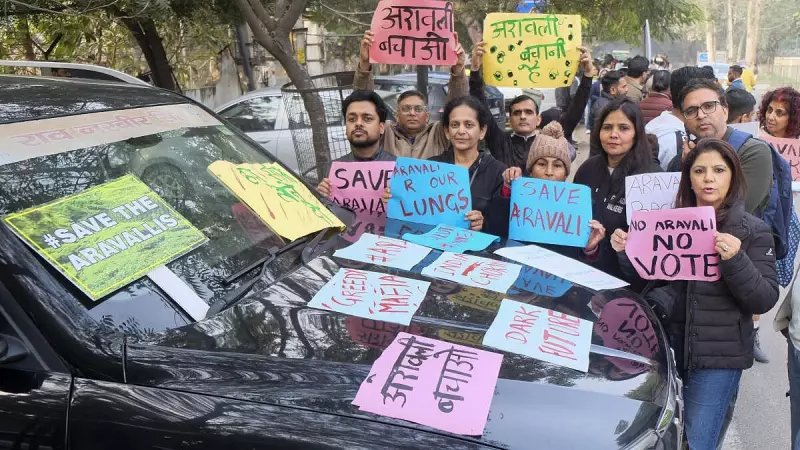
The central government has firmly rejected accusations that a recent change in the legal definition of the Aravalli range is intended to facilitate mining activities. Instead, authorities assert that the move is part of a Supreme Court-approved framework designed to provide stronger, long-term protection for the ecologically fragile mountain system.
Government Clarifies Stance on Protection Framework
In an official statement, the Centre addressed concerns head-on, dismissing the charge that the definitional adjustment was a precursor to increased mining. The government emphasized that the revised framework, which received the Supreme Court's endorsement, actually imposes stricter safeguards. A key component of this plan is a complete freeze on granting any new mining leases in the region. This moratorium will remain in effect until a comprehensive and scientific management plan for the entire Aravalli system is finalized and implemented.
Supreme Court Mandate Drives Conservation Efforts
The decision stems from a directive by the Supreme Court, which has been actively involved in preserving the Aravallis. The court-mandated framework aims to create a unified and robust conservation strategy. By redefining the legal boundaries, the government claims it is closing loopholes that previously allowed degradation in areas not explicitly classified as forest or wildlife zone. The final comprehensive management plan, once ready, will dictate all future activities, including any potential regulated mining, based on environmental carrying capacity and sustainability principles.

Implications for the Future of the Aravallis
The immediate consequence of this policy is a halt to new mining projects. Environmental groups have long advocated for such a freeze, arguing that unchecked excavation has led to severe ecological damage, loss of forest cover, and depletion of groundwater in the states of Haryana, Rajasthan, and Delhi. The government's assertion that its actions are protective, not permissive, seeks to align with these concerns. The focus now shifts to the drafting of the final management plan, a process that will be closely watched by conservationists, resident welfare associations, and the mining industry alike. The outcome will determine the long-term fate of one of India's oldest mountain ranges.
The official statement was released on 21 December 2025, clarifying the government's position on this sensitive environmental issue.