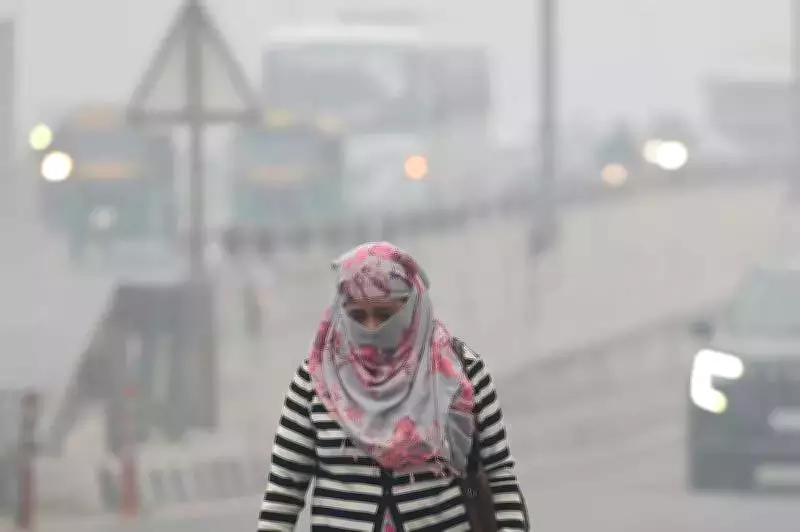
Ghaziabad Emerges as India's Most Polluted City During Winter 2025-26 Season
A comprehensive new analysis conducted by the Centre for Research on Energy and Clean Air (CREA) has identified Ghaziabad as the most polluted city in India during the winter season spanning from October 1, 2025, to February 28, 2026. The study, which examined air quality data from 204 cities across the nation, placed Noida and Delhi in second and third positions, respectively, highlighting a severe air pollution crisis in the National Capital Region and surrounding areas.
Alarming PM2.5 Concentration Levels Exceed National Standards
The analysis revealed that Ghaziabad recorded an average PM2.5 concentration of 172 micrograms per cubic metre over the winter period. This figure drastically surpasses the daily national ambient air quality standard of 60 micrograms per cubic metre, indicating a nearly threefold violation of safe limits. Noida followed closely with an average concentration of 166 micrograms per cubic metre, while Delhi, ranking third, registered an average of 163 micrograms per cubic metre.
Delhi's air quality breakdown was particularly concerning: the city experienced 18 days classified in the severe category, 87 days in the very poor category, 24 days in the poor category, 15 days in the moderate category, six days in the satisfactory category, and merely one day in the good category based on average PM2.5 levels. Furthermore, according to the Air Quality Index (AQI), which incorporates eight pollutants, Delhi has not recorded a single 'good' air day since 2023, underscoring a persistent and worsening environmental health issue.

Top 10 Most Polluted Cities and Broader Regional Trends
The CREA report listed the top ten most polluted cities during the winter season, with Greater Noida and Baghpat securing fourth and tenth places, respectively. Other cities in this concerning ranking included Bahadurgarh, Dharuhera, Gurgaon, Bhiwadi, and Charkhi Dadri, all located in or near the National Capital Region, suggesting a regional air quality crisis.
Among India's megacities, Delhi was the most polluted, followed by Kolkata with an average PM2.5 concentration of 78 µg/m³, Mumbai at 48 µg/m³, and Chennai at 44 µg/m³. Bengaluru recorded a relatively lower average of 39 µg/m³, though it still warrants attention for public health.
Indo-Gangetic Plains Face Widespread Air Quality Failures
The study focused on 89 cities within the Indo-Gangetic Plains, where 79 cities had sufficient data for analysis. Alarmingly, 75 of these cities exceeded the national air quality standards, with only four cities complying within the prescribed limits. This indicates a systemic failure in air pollution control across one of India's most densely populated and agriculturally significant regions.
CREA's methodology involved analyzing real-time data from cities that had monitoring information available for at least 80% of the days during the winter season, ensuring a robust and representative dataset. The findings call for urgent policy interventions and stricter enforcement of environmental regulations to mitigate the public health risks associated with prolonged exposure to hazardous air pollutants.