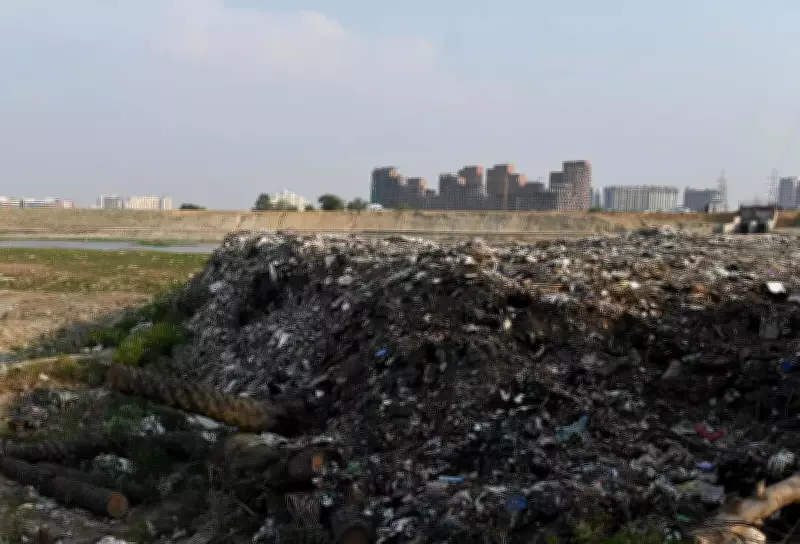
A recent TOI reality check has revealed large-scale dumping of garbage along a 2-kilometer stretch of the Gomti riverbank between G20 Circle and Shiv Shakti Dham temple in Lucknow. The waste, including plastic, construction debris, household refuse, and organic matter, is scattered across the dry riverbed and embankments, with some piles reaching stagnant water pools connected to the river. Residents and environmental experts warn that this waste could be washed into the Gomti during rainfall, posing a serious threat to water quality and aquatic life.
Residents Raise Concerns
Local residents report that garbage mounds have been accumulating over the past seven years, allegedly due to dumping by builders and civic agencies. Sewage flowing into the river has further worsened the accumulation along the banks. Prashant Singh, a resident of Gomti Nagar Extension, expressed concern: “This water is supplied to the city after treatment. If dumping continues like this, how will the authorities be able to clean it?”
Environmental and Health Risks
Prof Venketesh Dutta, head of the Department of Environmental Sciences at BBAU, explained the ecological impact: “Once plastic enters the river, it breaks down into microplastics and enters the food chain, while decomposing organic waste reduces dissolved oxygen levels, affecting aquatic life.” He added that leachate from the waste can carry harmful chemicals into the river during rains. Public health expert Dr Amit Singh warned that such dumping could become a breeding ground for mosquitoes and flies, and burning of waste could release toxic fumes affecting air quality.

Authorities Point Fingers
Officials from the Lucknow Municipal Corporation (LMC), Lucknow Development Authority (LDA), and the irrigation department claimed they had no information on how the waste accumulated. Zonal supervisor of LMC, Pankaj Shukla, stated that the land belongs to LDA, which is responsible for preventing dumping. “If LDA requests, we can assist in clearing the waste,” he said. However, Ajit Kumar, executive engineer of LDA, denied ownership, claiming a 100-meter stretch along the riverbank falls under the irrigation department. Executive engineer of the irrigation department, Mukesh Kumar Vaish, countered that under the Environment Act of 2007, waste management within city limits is the responsibility of LMC. He added that his department neither dumped the garbage nor is mandated or equipped to clear such waste.