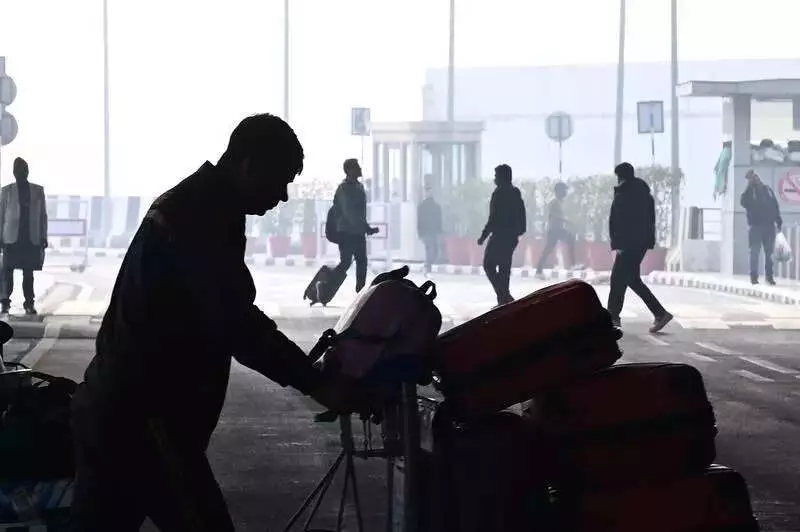
Residents of India's capital woke up to severely disrupted travel and near-zero visibility on Tuesday as a thick blanket of fog engulfed Delhi. The intense fog conditions, which lasted for several hours, plunged visibility to a mere 50 metres, triggering massive delays in air travel and significant inconvenience for thousands.
Visibility Plummets, Flights Grounded
According to senior IMD scientist R K Jenamani, visibility across the city remained below 200 metres from 5:30 am until 9:30 am. The situation was most critical between 7:30 am and 8:30 am, when visibility dropped drastically to just 50 metres for a full hour. The fog only began to lift after the sun emerged. The meteorological department has forecast that shallow to moderate fog is likely to persist on Wednesday and Thursday. Furthermore, a yellow alert has been issued for Friday, warning of dense fog at isolated locations in and around the capital.
Temperature Swing and Travel Nightmare
Interestingly, despite the cold fog, Tuesday's maximum temperature was recorded at 23.2 degrees Celsius, which is two and a half degrees above the seasonal normal and 1.4 degrees higher than Monday's high. The minimum temperature settled at 8.8°C, also slightly above normal. For Wednesday, the maximum and minimum temperatures are predicted to be around 18-20°C and 8-10°C respectively, with strong surface winds of 10-15 kmph expected during the day.

The primary impact of the dense fog was felt at the Indira Gandhi International Airport (IGIA) and other airports across north India. Flight operations were severely hampered, leading to cascading delays. Data from flight tracking service FlightRadar24 revealed that the average delay for the affected flights was 34 minutes. In total, 550 flights were delayed and 10 flights were cancelled. Of the cancelled services, six were inbound flights to Delhi, while four were scheduled to depart from the capital.
Passenger Ordeal Highlights Systemic Delays
The human cost of the disruption was captured in the experience of passenger Nirbhay Singh. Scheduled to fly to Ranchi on a 6:45 am departure from Terminal 1, his journey turned into a marathon ordeal. After receiving conflicting messages about delays due to bad weather, he arrived at the airport at 4 am, only to face multiple revisions to his departure time—first to 8:45 am, then 9:40 am, and finally 10:15 am.
The problems persisted even after boarding. "After all the flyers were seated, the aircraft moved for a few minutes and then stopped for 10 to 15 minutes," Singh recounted. The cabin crew cited technical issues but could not provide a new departure time. Passengers were served food while waiting on the tarmac. After the captain announced readiness for takeoff, the plane was again held up waiting for Air Traffic Control (ATC) clearance. Singh stated they remained seated in the aircraft from 10:15 am until 1:20 pm. The flight eventually took off after a six-and-a-half-hour delay, reaching Ranchi around 2:33 pm.
The widespread disruption serves as a stark annual reminder of the impact of north India's winter fog on the country's busiest aviation hub, affecting schedules nationwide and testing the patience of travellers.