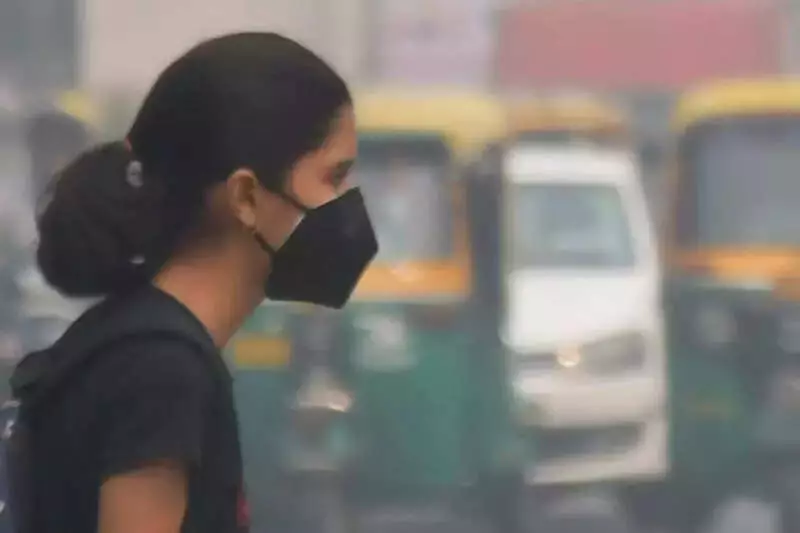
New Delhi has recorded its worst annual nitrogen dioxide pollution in five years, with 2023's average levels climbing to a concerning high not seen since 2018. The toxic gas, primarily emitted from vehicles and industries, is now at concentrations far exceeding both national and global safety guidelines, posing significant health risks to the capital's residents.
Alarming Rise in Toxic Gas Concentration
Data analysed by the think tank EnviroCatalyst from the Central Pollution Control Board (CPCB) reveals a troubling trend. The average concentration of nitrogen dioxide (NO2) in the city until December 22 stood at 47 micrograms per cubic metre (µg/m³). This marks a clear increase from the 43 µg/m³ recorded in 2022.
This level is not only higher than India's annual national ambient air quality standard of 40 µg/m³ but is a staggering 4.7 times more than the World Health Organisation's (WHO) stringent annual safe guideline of just 10 µg/m³. Nitrogen dioxide is a highly reactive gas produced by burning fuel, with major sources being vehicles, power plants, and industrial units.

Traffic and Industrial Hubs Emerge as Major Hotspots
The analysis pinpoints specific locations suffering the most severe pollution. The highest annual mean concentration was recorded at ITO, a notorious traffic choke point, with a reading of 69 µg/m³. It was closely followed by Indira Gandhi International Airport's Terminal 3 at 68 µg/m³.
Other critical hotspots include Anand Vihar and Shadipur (each at 66 µg/m³), Wazirpur (65 µg/m³), Lodhi Road (62 µg/m³), and Jahangirpuri (61 µg/m³). The list of affected areas is extensive, with IIT-Delhi, Okhla Phase-2, Dwarka Sector-8, Pusa, Chandni Chowk, and Najafgarh all registering dangerously high levels above 50 µg/m³.
Expert Analysis and Wider Environmental Impact
Sunil Dahiya, founder and lead analyst at EnviroCatalyst, highlighted local sources as a key problem. "Burning of waste in several localities has also contributed to its elevated levels, and that should be controlled. It means there is a need to reduce emissions from local sources within the city," he stated.
Dipankar Saha, former head of CPCB's air laboratory, explained the dual danger of NO2. He noted that it acts as a precursor for the formation of ground-level ozone, a harmful pollutant. Furthermore, "Nitrogen dioxide can combine with naturally available positive ions like ammonium, sodium, potassium and magnesium, and produce secondary particulate aerosols. Thus, it also helps in the production of particulate load in the air," Saha said.
This connection was underscored in a recent Centre for Science and Environment (CSE) analysis of early winter trends, which found that PM2.5 levels rose and fell almost in tandem with nitrogen dioxide, especially during peak traffic hours in the morning and evening.
The historical data from CPCB shows the persistent nature of the crisis: the annual average was 35 µg/m³ in 2023, 40 µg/m³ in both 2022 and 2021, 39 µg/m³ in 2020, 45 µg/m³ in 2019, and 48 µg/m³ in 2018. The current year's figure indicates a regression, demanding urgent policy intervention and action to curb emissions from transportation and industrial activities.