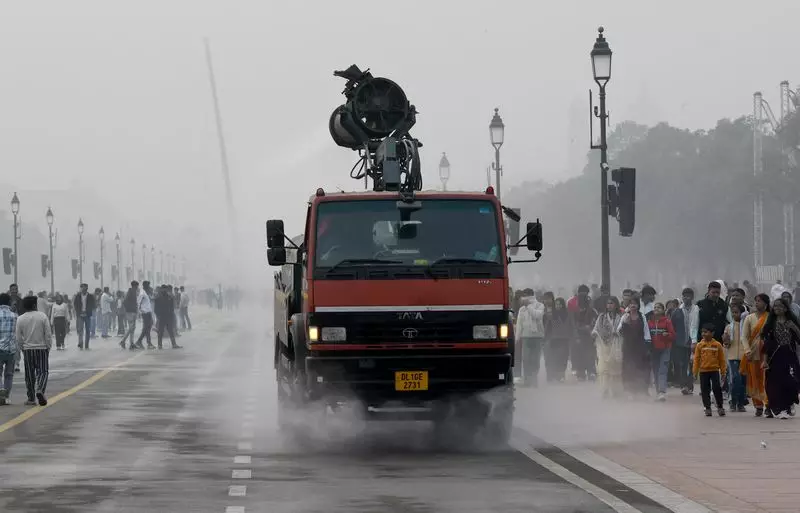
The air quality in India's capital took a significant turn for the worse on Thursday, with pollution levels entering the 'Poor' category. The overall Air Quality Index (AQI) for Delhi was recorded close to the 300 mark, indicating a serious deterioration in the air that millions of residents breathe.
Key Readings and Affected Areas
According to data from the Central Pollution Control Board (CPCB), the 24-hour average AQI stood at 297. This reading, taken at 4 pm, firmly placed the city's air in the 'Poor' zone. The situation was not uniform across the National Capital Region (NCR).
Several monitoring stations reported even more alarming figures. Major Dhyan Chand National Stadium recorded an AQI of 323, while the station at Delhi Technical University (DTU) in Dwarka Sector 8 registered a reading of 314. Other areas like ITO and Patparganj also witnessed AQI levels exceeding 300, highlighting the widespread nature of the problem.

Meteorological Factors Behind the Smog
Experts from the India Meteorological Department (IMD) and pollution control bodies pointed to specific weather conditions as the primary culprits for the spike in pollution. The key factors identified were calm wind speeds and low temperatures.
These conditions prevent the effective dispersal of pollutants, allowing harmful particulate matter (PM2.5 and PM10) to accumulate near the ground. The lack of strong winds essentially traps the pollution over the city, leading to the hazy conditions and poor air quality witnessed by residents.
Grading Scale and Health Implications
The AQI scale categorizes air quality from 0 to 500. An index value between 201 and 300 is classified as 'Poor'. As per official guidelines, when the AQI is in this range, it can lead to breathing discomfort for most people on prolonged exposure. Authorities often advise sensitive groups, including children, the elderly, and those with respiratory or cardiac conditions, to reduce heavy exertion outdoors.
The rapid decline from 'Moderate' to 'Poor' levels within a short span has raised concerns among environmentalists and health professionals. They warn that if the unfavorable meteorological conditions persist, the AQI could slide further into the 'Very Poor' category (301-400), triggering more severe health alerts and response measures under the Graded Response Action Plan (GRAP).
Looking Ahead and Official Stance
While no immediate emergency measures were announced, the concerned authorities are closely monitoring the situation. The focus remains on tracking wind patterns and temperatures, which are critical for natural cleansing of the atmosphere. Officials have indicated that any decision on implementing stricter anti-pollution curbs will depend on a sustained trend of poor air quality over the coming days.
This episode serves as a stark reminder of Delhi's perennial struggle with air pollution, especially as winter approaches. The combination of local emissions and adverse weather creates a challenging environment, demanding vigilance from both citizens and governing bodies to mitigate the public health impact.