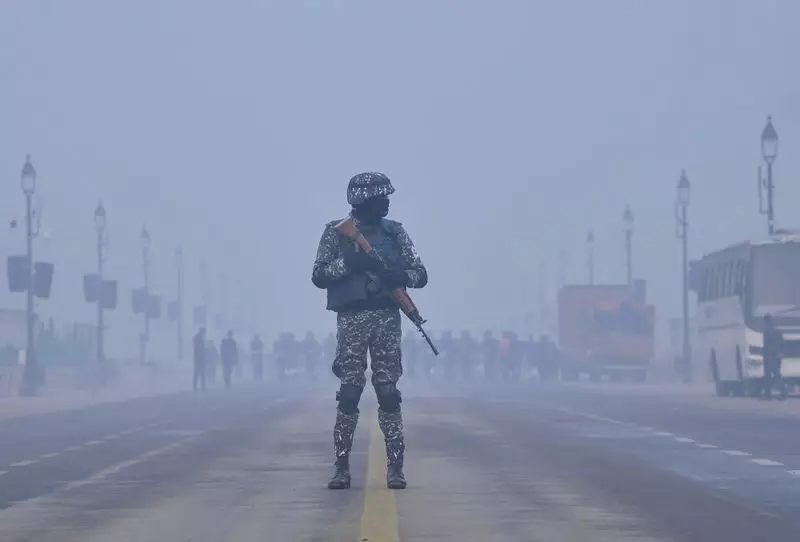
The air quality in the national capital took a sharp turn for the worse on Thursday, pushing the city perilously close to the 'severe' category. A significant number of monitoring stations across Delhi recorded alarming levels of pollution, painting a grim picture of the environmental crisis at hand.
Widespread Deterioration Across Monitoring Stations
Data from the Central Pollution Control Board (CPCB) revealed a disturbing trend. Out of the 40 operational stations in the city, a full 20 stations recorded an Air Quality Index (AQI) in the 'poor' to 'very poor' range. This widespread deterioration indicates that the pollution is not localized but a pervasive issue affecting large swathes of Delhi. The 24-hour average AQI, a crucial metric, settled at 281, firmly placing it in the 'poor' category according to the national standards.
Further analysis from the System of Air Quality and Weather Forecasting and Research (SAFAR) provided a more granular view. Their data showed that several key areas were suffering. The AQI at the Delhi University station was recorded at 311 ('very poor'), while the stations at Mathura Road and Pusa registered levels of 306 and 305 respectively, also in the 'very poor' bracket. The iconic India Gate area was not spared, with an AQI of 287 ('poor').
Contributing Factors and Meteorological Conditions
Experts pointed to a combination of factors behind this sudden spike in pollution levels. A significant contributor is the calm wind conditions and low temperatures that have settled over the region. These meteorological conditions act like a lid, trapping pollutants close to the ground and preventing their dispersion. Local emissions from vehicles, construction dust, and industrial activities continue to add to the toxic mix.
The situation is particularly concerning as it follows a period of relatively better air quality earlier in the week. The rapid decline underscores the precarious balance and how quickly conditions can worsen with unfavorable weather. Authorities are closely monitoring the situation, with the next few days being critical.
Official Warnings and Public Health Implications
The early morning data on Friday offered little respite. The CPCB's central control room for air quality management reported an overall AQI of 315 at 7 am, which is classified as 'very poor'. This indicates that the pollution accumulated overnight and the situation remained grave as the day began.
Officials have issued warnings, stating that if the current meteorological conditions persist, the air quality is likely to deteriorate further, potentially breaching the 'severe' category. Such levels pose serious health risks, especially for vulnerable groups including children, the elderly, and those with pre-existing respiratory and cardiovascular conditions. Doctors advise limiting outdoor activities and recommend the use of N95 or N99 masks when going outside.
The repeated episodes of severe air pollution in Delhi highlight the ongoing challenge of managing air quality in one of the world's most populous megacities. While short-term measures like the Graded Response Action Plan (GRAP) are activated during such periods, environmentalists stress the need for sustained, year-round action to tackle the root causes of pollution from transportation, industry, and waste management.