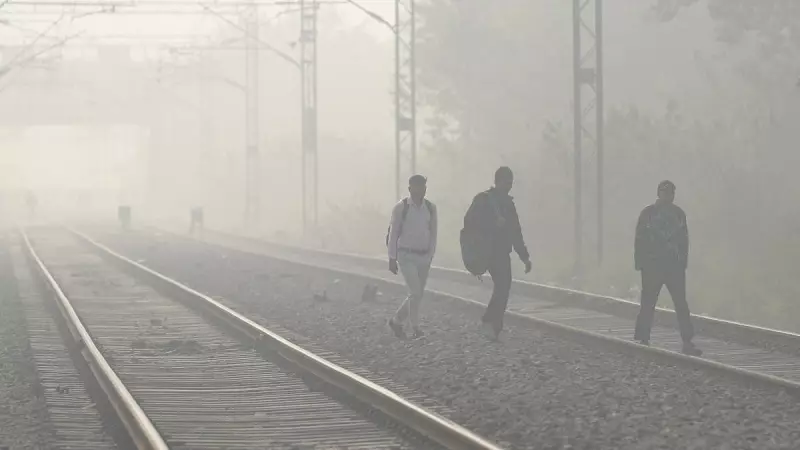
The air quality in India's capital took a sharp turn for the worse, with pollution levels spiking dangerously close to the 'severe' category. Data released by the Central Pollution Control Board (CPCB) paints a grim picture for the city's residents.
Widespread Deterioration Across Monitoring Stations
According to the latest CPCB data, a significant number of air quality monitoring stations across Delhi logged alarming readings. At least 20 stations recorded Air Quality Index (AQI) levels that fell into the severe category. This widespread deterioration indicates that the toxic haze was not localized but had engulfed large parts of the National Capital Region. The data, which highlights the scale of the crisis, was recorded and published on 27 December 2025.
Understanding the Severe AQI Readings
When the AQI enters the 'severe' zone, it signifies a public health emergency. The concentration of harmful particulate matter, known as PM2.5 and PM10, exceeds extraordinarily high limits. Such conditions pose serious health risks even to healthy individuals and mandate stringent action. The fact that twenty separate stations reported these levels simultaneously underscores a systemic pollution event affecting the entire city's atmosphere.

Implications and Necessary Precautions
The sudden spike in pollution levels, bringing Delhi's air quality near the severe mark, demands immediate public awareness and official response. Prolonged exposure to air of this quality can lead to aggravated respiratory and cardiovascular illnesses. Authorities typically advise vulnerable groups, including children, the elderly, and those with pre-existing conditions, to avoid outdoor activities. The CPCB data serves as a critical alert for both citizens to take protective measures and for agencies to enforce existing pollution control plans more rigorously.
The situation, as of the late afternoon of 27th December 2025, remains a major concern for the millions living in Delhi, turning the focus back onto the perennial challenge of combating air pollution in the region.