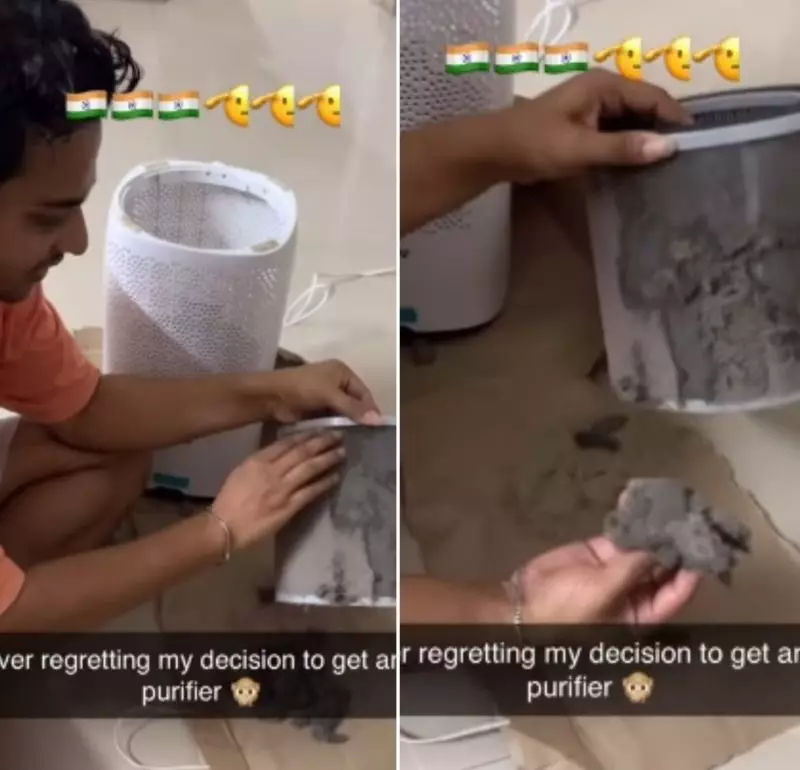
A shocking visual from India's capital has exposed the severity of Delhi's air pollution crisis in the most alarming way possible. A resident's air purifier filter turned completely black after just 24 hours of use, creating what social media users are calling a grim "Mera Desh Badal Raha Hai" moment.
The Viral Revelation That Shook Social Media
The disturbing transformation was shared on platform X (formerly Twitter) by user Roshan Rai, who posted side-by-side images showing the dramatic change. On the left was a clean, white filter fresh out of the box. On the right stood the same filter after merely one day of operation in Delhi's air - now completely blackened by pollutants.
The post quickly went viral, amassing over 200,000 views and triggering widespread concern among netizens. Accompanying the images was a caption that read: "Bought a personal air purifier for the first time. Changed the filter yesterday. This is after 24 hours of use in Delhi. No wonder we can't see anything beyond a few metres and our eyes are burning."

Understanding Delhi's Pollution Emergency
This visual evidence emerged during a period when Delhi's air quality index (AQI) consistently registered in the 'severe' category across multiple monitoring stations. The pollution levels have become so dangerous that they pose serious health risks to the city's residents.
Medical experts have been warning about the severe health implications of breathing such contaminated air. Prolonged exposure to high levels of PM2.5 particles - the microscopic pollutants that likely blackened the filter - can lead to respiratory diseases, cardiovascular problems, and other serious health conditions.
The timing of this revelation coincides with the ongoing stubble burning season in neighboring states, vehicular emissions, and industrial pollution - all contributing factors to Delhi's annual pollution nightmare.
Public Reaction and Growing Concerns
The viral post triggered an avalanche of responses from concerned citizens sharing similar experiences and expressing frustration over the continuing pollution crisis. Many users described their own health struggles due to the poor air quality, while others questioned the effectiveness of government measures to combat pollution.
Several commenters noted that this single image tells a more powerful story about Delhi's air quality than any official data or report could convey. The visual evidence makes the invisible danger of air pollution suddenly visible and tangible, creating what many are calling a wake-up call for both authorities and citizens.
Environmental activists have pointed to this incident as evidence that current pollution control measures remain insufficient. The rapid filter blackening demonstrates that despite various government initiatives and pollution control policies, the ground reality remains alarming for Delhi's approximately 20 million residents.
As Delhi continues to grapple with its annual pollution crisis, this stark visual representation serves as a grim reminder of the environmental challenges facing India's capital. The blackened filter stands as silent testimony to the urgent need for more effective and comprehensive solutions to combat air pollution and protect public health.