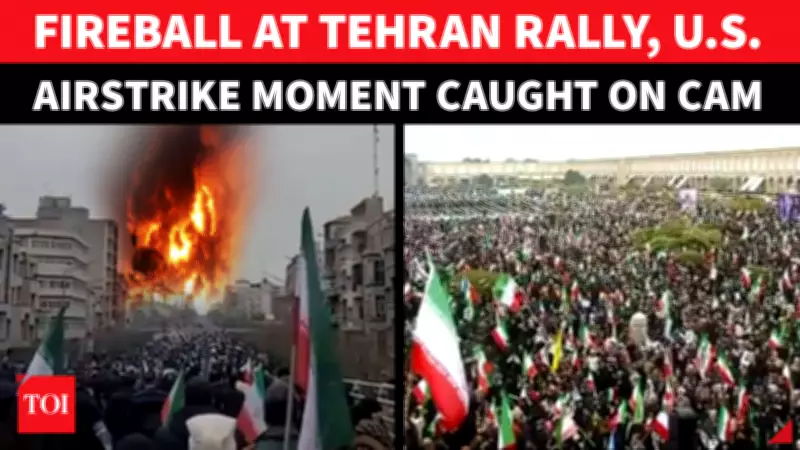
Deadly Explosion Rocks Tehran's Quds Day Rally, Iranian Leaders Remain Present
A powerful explosion tore through a massive Al-Quds Day rally in Tehran on Friday, sending shockwaves through the crowd as thousands gathered to express solidarity with Palestinians. The blast occurred near Ferdowsi Square, adjacent to Tehran University, a focal point for the annual demonstrations. Dramatic footage broadcast by Iranian state media captured the chaotic moment when the explosion erupted, causing widespread panic among participants.
Casualties and Immediate Aftermath
Initial reports confirm that at least one person was killed in the explosion, with injuries likely among others as the situation unfolded rapidly. The incident prompted a swift response from emergency services, though details on the total number of casualties remain unclear. Eyewitnesses described scenes of confusion and fear as rally-goers scrambled for safety amidst the turmoil.
Political Response and Leadership Presence
Despite the heightened tensions and reported security concerns, Iranian President Masoud Pezeshkian attended the rally, appearing undeterred by the explosion. His presence underscored the government's commitment to the Al-Quds Day event, which is a key platform for Iran to showcase its support for Palestinian causes. Analysts note that such demonstrations are often used to project strength and unity in the face of external pressures.

- The explosion happened during the Al-Quds Day rally, an annual event marking solidarity with Palestinians.
- Location was near Ferdowsi Square and Tehran University, central hubs for the gathering.
- At least one fatality has been reported, with potential for more injuries as investigations continue.
- Iranian state media released video footage showing the blast's immediate impact.
The Al-Quds Day rally is a significant occasion in Iran, drawing large crowds to protest against Israel and express support for Palestinian resistance movements. This year's event was particularly tense amid ongoing regional conflicts, including recent escalations involving Iran-backed groups like Hezbollah. The explosion adds a layer of complexity to an already volatile situation, raising questions about security measures at such high-profile gatherings.
Context and Broader Implications:- The blast occurs against a backdrop of increased military activities in the Middle East, with Iran frequently at the center of geopolitical tensions.
- It highlights the challenges of maintaining public safety during mass demonstrations in politically charged environments.
- The incident may influence Iran's domestic and foreign policy narratives, especially regarding its stance on Palestinian issues.
As authorities investigate the cause of the explosion, speculation abounds regarding whether it was an accident or a deliberate act. No group has claimed responsibility so far, leaving many to ponder the motives behind the blast. The rally continued despite the disruption, with leaders like President Pezeshkian emphasizing resilience in the face of adversity.
This event underscores the fragile security landscape in Tehran and the broader region, where political rallies often serve as flashpoints for violence. It also reflects the enduring significance of Al-Quds Day in Iranian society, symbolizing unwavering support for Palestinian aspirations. Moving forward, the Iranian government is likely to bolster security protocols for future events while using this incident to reinforce its ideological commitments.