Central University of Haryana Hosts Major Environmental Conference
The Department of Environmental Studies at the School of Interdisciplinary and Applied Sciences, Central University of Haryana (CUH) in Mahendragarh, successfully organized the third National Conference of Environmental Nodal Officers (ENOs). This significant event was held under the theme “Ancient wisdom, modern technologies for a sustainable and climate-resilient future.” The conference was conducted in collaboration with the Paryavaran Sanrakshan Gatividhi initiative, aiming to foster a robust dialogue on environmental conservation.
Promoting Dialogue on Sustainability and Innovation
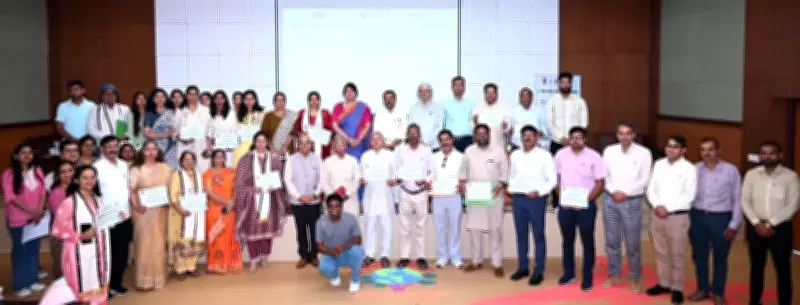
The primary objective of the conference was to encourage meaningful discussions on how traditional knowledge systems can be seamlessly integrated with contemporary scientific approaches to address pressing environmental challenges. Nearly 150 participants, including 30 Environmental Nodal Officers from various states across India, gathered for this two-day event. They engaged in in-depth conversations about sustainable development and ecological preservation.
During the conference, four technical sessions were conducted, covering a wide range of critical topics. These included climate change mitigation strategies, sustainability practices, environmental ethics, ecological conservation efforts, and the latest technological innovations in the field. Participants presented more than 60 research papers, showcasing cutting-edge studies and practical solutions for environmental issues.

Leadership Insights and University Initiatives
In his address to the attendees, CUH Vice-Chancellor Prof Tankeshwar Kumar emphasized that the environment belongs to everyone and its protection requires collective efforts from all segments of society. He highlighted several sustainable initiatives already implemented at the university, such as:
- Installation of rooftop solar panels to harness renewable energy.
- Utilization of electric vehicles to reduce carbon emissions.
- Implementation of rainwater harvesting systems for water conservation.
- Adoption of waste-to-energy practices and scientific solid waste management.
- Water recycling programs to minimize resource wastage.
Prof Kumar also stressed the importance of prioritizing environmental protection in research and innovation. He referenced historical figures like Amrita Devi and Guru Jambheshwar, advocating for the adoption of traditional ecological wisdom alongside modern technological advancements.
Expert Discussions and Future Directions
Prof Anita Singh, Head of the Department of Environmental Studies, welcomed the guests and outlined the conference's objectives, setting a collaborative tone for the proceedings. In a technical session focused on “Innovation to implementation,” experts shared valuable insights on sustainable models and practical approaches that can be adopted on a larger scale.
The organizers stated that this event provided a vital national platform for meaningful discourse on environmental protection. It is expected to inspire concrete actions toward building a sustainable and climate-resilient future by strengthening the bridge between ancient ecological wisdom and modern scientific innovations. This conference marks a significant step in promoting holistic strategies for environmental sustainability in India.