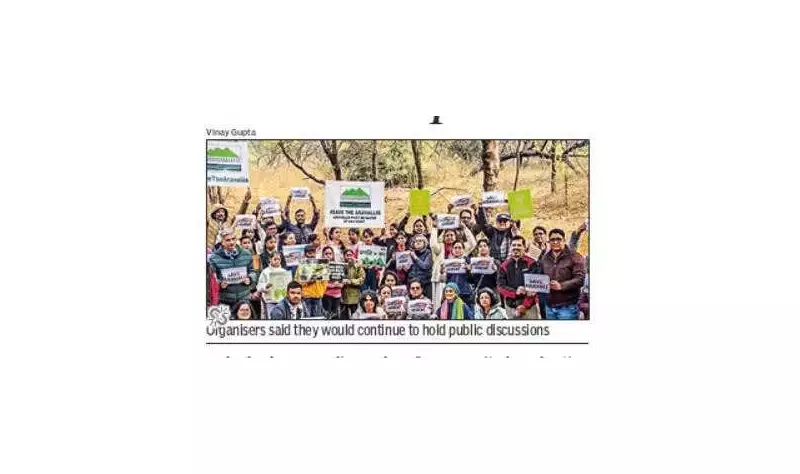
In a significant push for ecological conservation, citizens in Gurgaon have called upon the central government to pursue UNESCO Biosphere Reserve status for the entire Aravalli hill range. The demand, aimed at ensuring long-term protection for the fragile ecosystem, was voiced during a community gathering on Sunday.
A Collective Call for Holistic Protection
The event, a 'Sunday Baithak', was organized by the Aravalli Bachao Citizens Movement (ABCM) behind Suncity in a forested area of Gurgaon. It saw participation from parents, senior citizens, students, and environmental volunteers from across the National Capital Region (NCR). The gathering featured poetry readings, policy discussions, and role-plays centered on court decisions affecting the region.
Participants criticized what they termed fragmented "definition-led" approaches tied to mining interests. Instead, they advocated for a comprehensive plan to restore the entire 76,000 sq km Aravalli landscape. "Recognising the power of community-based action is so important," said Akshay Khurana, who works on zero-waste initiatives. He emphasized that the range should be declared a protected UNESCO biosphere.

Charter of Demands for a Sustainable Future
The collective read out a charter of demands, presenting a bold vision for the region's future. Key points included:
- A complete halt to mining across the Aravalli biosphere by January 26.
- A pause on all construction activity until air quality improves to an AQI of 50.
- Stricter emission norms for coal-fired power plants and a ban on waste-to-energy plants.
- Introduction of free public transport to reduce private vehicle use.
- Substantially higher taxes on private transport to fund public mobility infrastructure.
One of the prominent appeals at the event succinctly captured the sentiment: "No defining away our ecosystems."
Context: The Supreme Court Order
The discussions also touched upon a recent Supreme Court development. Participants analyzed the court's December 29 order, which kept in abeyance its earlier November 20 direction. The earlier order had accepted a Union environment ministry panel's recommendation to classify only landforms at least 100 metres above local relief as Aravalli hills, along with their slopes and adjacent land. This technical definition has been a point of contention for conservationists who fear it leaves vast stretches vulnerable.
Obtaining UNESCO Biosphere Reserve status would integrate the entire Aravalli range into the World Network of Biosphere Reserves (WNBR), designating it as a learning site for sustainable development practices. This move, citizens argue, is the only way to guarantee coordinated and permanent protection for one of India's oldest mountain ranges, which is critical for the ecological health of the NCR.