

Chandigarh Reels Under Fury of Severe Storm
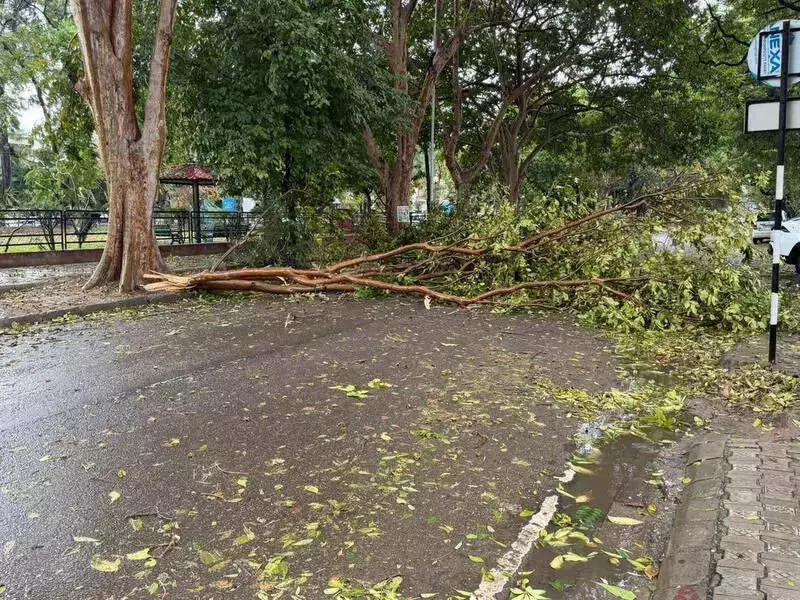
Chandigarh witnessed a day of chaos and disruption as powerful winds accompanied by intermittent rain lashed the city throughout Friday. The severe weather conditions led to the toppling of more than a dozen fully grown trees and caused heavy branches to crash down across numerous residential neighborhoods, creating widespread civic challenges.
Widespread Damage Across Municipal Corporation Areas
The impact of the storm was felt extensively across areas under the jurisdiction of the Municipal Corporation. Collapsing trees and falling branches caused significant damage to houses, vehicles, electricity poles, and internal roads. Residents faced prolonged power cuts and found their access routes blocked, severely hampering daily activities and traffic movement throughout the affected sectors.
Sector 35 Emerges as Worst-Affected Zone
The weather took a dramatic turn for the worse early in the day, and by afternoon, trees were crashing down in multiple locations. Sector 35 emerged as one of the most severely impacted areas, where a two-wheeler rider sustained serious injuries after a large tree branch fell directly on him. Although his helmet provided crucial head protection, the individual suffered severe injuries to his back and legs and required immediate hospitalization.

Area councillor Prem Lata promptly visited the incident site, assisted the injured man, and later conducted inspections across several affected points in Sector 35 and other parts of her ward. She briefed officials about the gravity of the situation and coordinated response efforts.
Within Sector 35 alone, trees and heavy branches collapsed inside residential compounds, creating widespread disruption. In one alarming incident, an elderly woman narrowly escaped injury when a tree fell in Sector 35-B. In another case, a servant's quarter inside a Sector 35 house was completely destroyed by falling debris. Fortunately, no casualties were reported in these particular incidents.
Multiple Sectors Experience Similar Devastation
Similar tree fall incidents were recorded across numerous other sectors including:
- Sectors 36, 37, and 38
- Sectors 20, 21, and 22
- Sectors 44, 15, 4, 5, and 23
- Manimajra area
This extensive geographical spread clearly indicates the far-reaching impact of the storm across Chandigarh.
Major Power Disruptions Paralyze City
The falling trees triggered significant power disturbances throughout Chandigarh. According to Foswac chairman Baljinder Singh Bittu, electricity supply remained disrupted in many areas for 12 to 16 hours as trees and branches struck poles and damaged overhead wires. Most of the fallen trees were green and healthy, but several had developed overgrown canopies that contributed to branches snapping under the intense pressure of the storm.
Municipal Corporation's Response Efforts
MC teams from the horticulture department were deployed early in the morning, equipped with machinery and sufficient manpower to clear the debris. However, many roads remained blocked for hours as workers struggled to cut through dense fallen branches, remove uprooted trees, and manage broken electricity poles and wires.
The southern part of Chandigarh bore the brunt of the storm, with incidents more concentrated in that region. Sources within the MC revealed that more than 100 employees, along with tractor-trolleys and other machinery, continued operations throughout the day. Senior officers closely monitored the situation, visiting affected areas and preparing detailed reports for higher authorities.
While the sudden weather disturbances caused widespread civic inconvenience, the coordinated response teams worked diligently to restore normalcy at the earliest possible opportunity.
Waterlogging Not a Major Concern
Interestingly, with most disruption caused by fallen trees, waterlogging did not pose a significant problem during this weather event. Minor cases of a few chambers along the roads overflowing were reported, but there was no substantial waterlogging, even in traditionally low-lying areas. Over 20 teams from the MC's public health and engineering wing remained on the field round the clock to monitor the situation and carry out necessary works.

Specific Areas of Severe Tree Damage
The storm caused particularly severe damage at several specific locations:
- Kanak Champa tree fell near house number 3 in Sector 4
- Eucalyptus tree fell near house number 21 in Sector 5
- Chakrassia tree fell near house number 2447, Sector 23
- Putrnjiva tree fell near house number 238, Sector 15A
- Buddha coconut tree fell near house number 190, Sector 15-A
- Mango tree fell near the floral garden, Sector 15
- Mulberry tree fell along the V3 road of Vigyan Path
The extensive damage caused by the storm highlights the vulnerability of urban infrastructure to extreme weather events and underscores the importance of robust civic response mechanisms during such emergencies.





