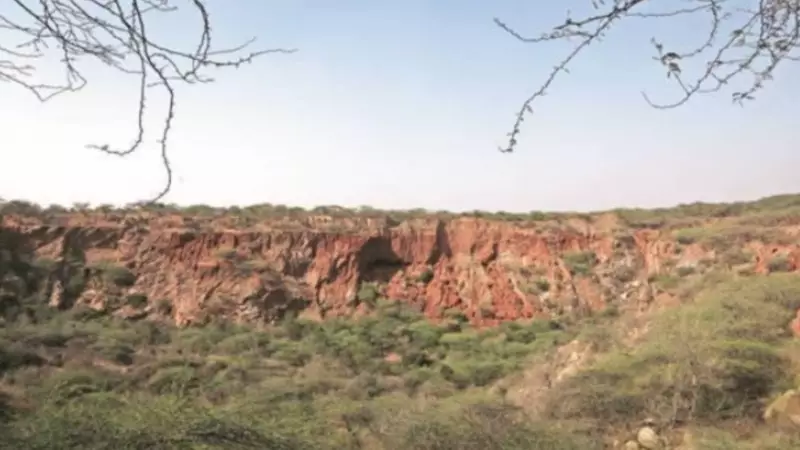
In a decisive move to protect the ecologically fragile Aravalli range, the Union Ministry of Environment, Forest and Climate Change (MoEF&CC) has formally directed three states to strictly adhere to a Supreme Court mandate prohibiting new mining leases. The directive, issued on December 24, 2025, targets the state governments of Rajasthan, Haryana, and Gujarat.
Reiterating the Supreme Court Mandate
The ministry's communication serves as an official reminder of the Supreme Court's November 20 order. The bench, led by the then Chief Justice of India B R Gavai, had ruled that no new mining leases should be granted until a comprehensive Management Plan on Sustainable Mining (MPSM) for the Aravalli landscape is finalized and approved.
"Concerned state governments are hereby requested to take necessary action for compliance of above directions of the Hon'ble Supreme Court and ensure that no new mining leases shall be granted till the Management Plan on Sustainable Mining is finalised by the MoEF&CC through ICFRE," stated the ministry's letter.

Expanding the Scope of Protection
Beyond enforcing the lease ban, the Centre has tasked the Indian Council of Forestry Research and Education (ICFRE) with a critical role. While preparing the MPSM, the ICFRE must conduct a thorough survey of the entire Aravalli landscape. Its mandate is to identify all specific landforms and zones where mining activities must be completely prohibited.
This identification process will be in addition to areas already off-limits, such as core inviolate zones and the hills and ranges themselves. The goal is to create a broader protective shield for the region's biodiversity and geological stability.
Regulating Existing Operations and a New Definition
The ministry's instructions are not limited to future leases. For mines already operational, the respective state governments have been directed to ensure strict compliance with all environmental safeguards in line with the court's order. Ongoing mining must be stringently regulated with additional restrictions to guarantee environmental protection and sustainable practices.
This push for conservation follows the Supreme Court's landmark November 20 order, which also established a new, uniform definition for the Aravalli Hills and range. The court defined the Aravalli Hills as any landform with an elevation of 100 metres or more above the local relief. A 'range' was defined as an extent of 500 metres between two or more such hills.
The Road Ahead: A Plan Modeled on Success
The forthcoming Management Plan on Sustainable Mining is expected to be a detailed blueprint. It must clearly demarcate areas where mining may be permissible, as well as ecologically sensitive, conservation-critical, and restoration priority zones where mining will be strictly banned or allowed only under exceptional, scientifically justified circumstances.
The Supreme Court has directed that this plan be prepared on the lines of the successful model executed by ICFRE for the Saranda forests in Jharkhand, which balanced conservation with regulated iron ore mining. The Centre's proactive communication underscores the national priority to preserve the Aravallis, a vital natural barrier against desertification and a key wildlife corridor.